

Jump to the 30-second cheat sheet for the key points.
One little fix at a time, we'll make your house a home! And when it comes to dead lawn patches, the “fix” is not tossing more seed at the problem. Grass seed only grows when it has good soil contact, steady moisture, and enough light and nutrients to establish roots after it sprouts.
This guide walks through a targeted method that works because it treats the cause of the bare spot first, then protects the seed from drying out, washing away, or getting eaten.
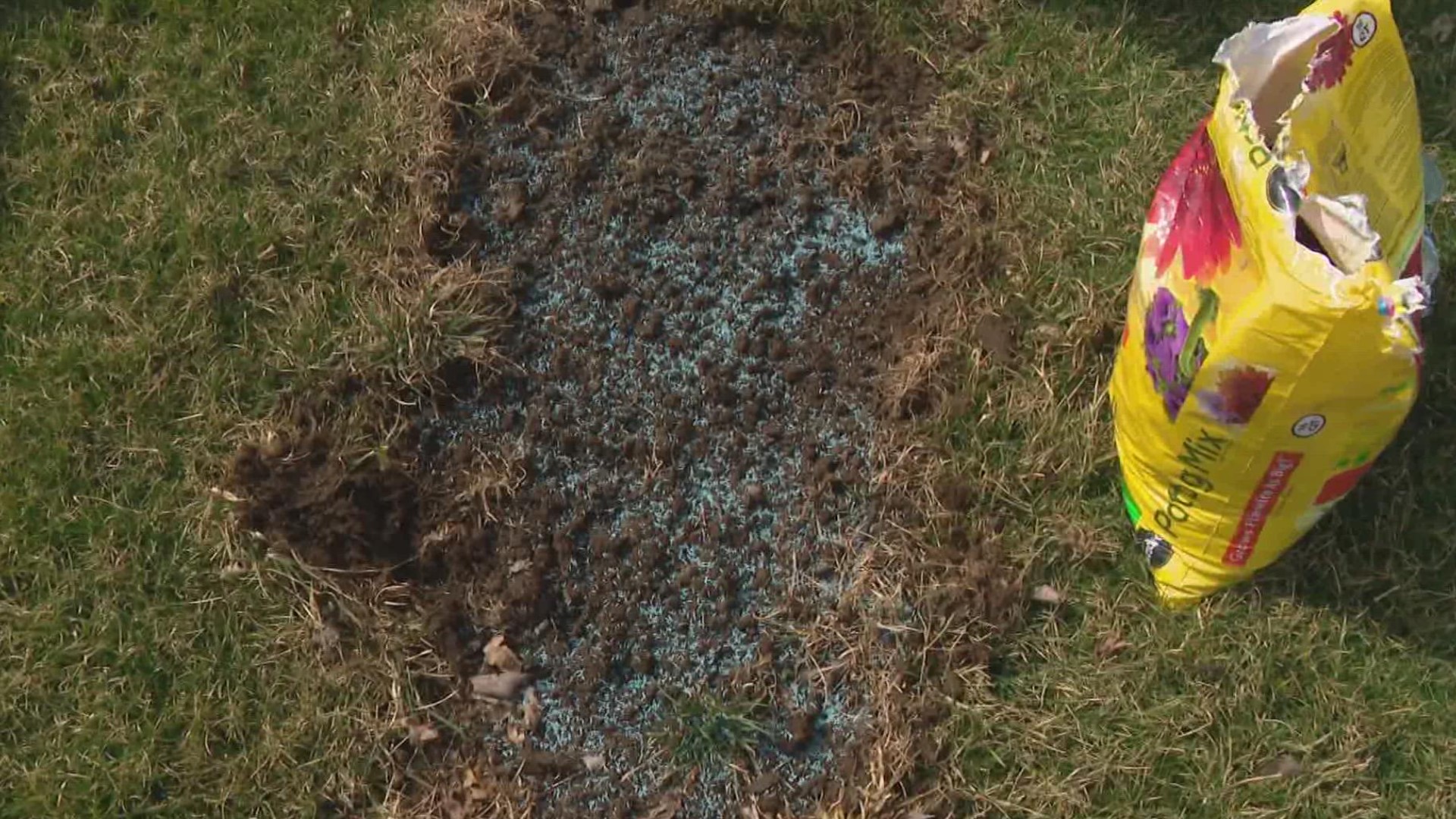
Why seed keeps failing in the same spots
Most dead patches are not “seed problems.” They are site problems. If you reseed without fixing what killed the grass, the new grass often fails too.
- Thatch and matted stems block soil contact. Seed dries out on top instead of nesting into soil.
- Compacted soil suffocates seedlings. Roots cannot dig in, water runs off, and the surface crusts over.
- Wrong watering rhythm. Big soakings with long dry gaps can kill germinating seed, especially in sun, wind, or sandy soil.
- Shade, traffic, pet urine, grubs, or drainage issues. The spot stays hostile even with fresh seed.
If you suspect moisture problems near the house, it helps to manage where water goes first. A simple yard grading tweak can make a big difference. See Slope Soil Away From Your Foundation.
Before you start: pick the right week
Grass seed has the best chance when it can stay consistently damp without baking in extreme heat.
- Cool-season lawns (many northern areas): early fall is usually easiest, and spring is the second-best window.
- Warm-season lawns (many southern areas): late spring into early summer, when soil is warm.
Aim for a stretch with mild temps and lighter winds. Wind dries the surface faster than most people expect.
Tools and materials (simple is fine)
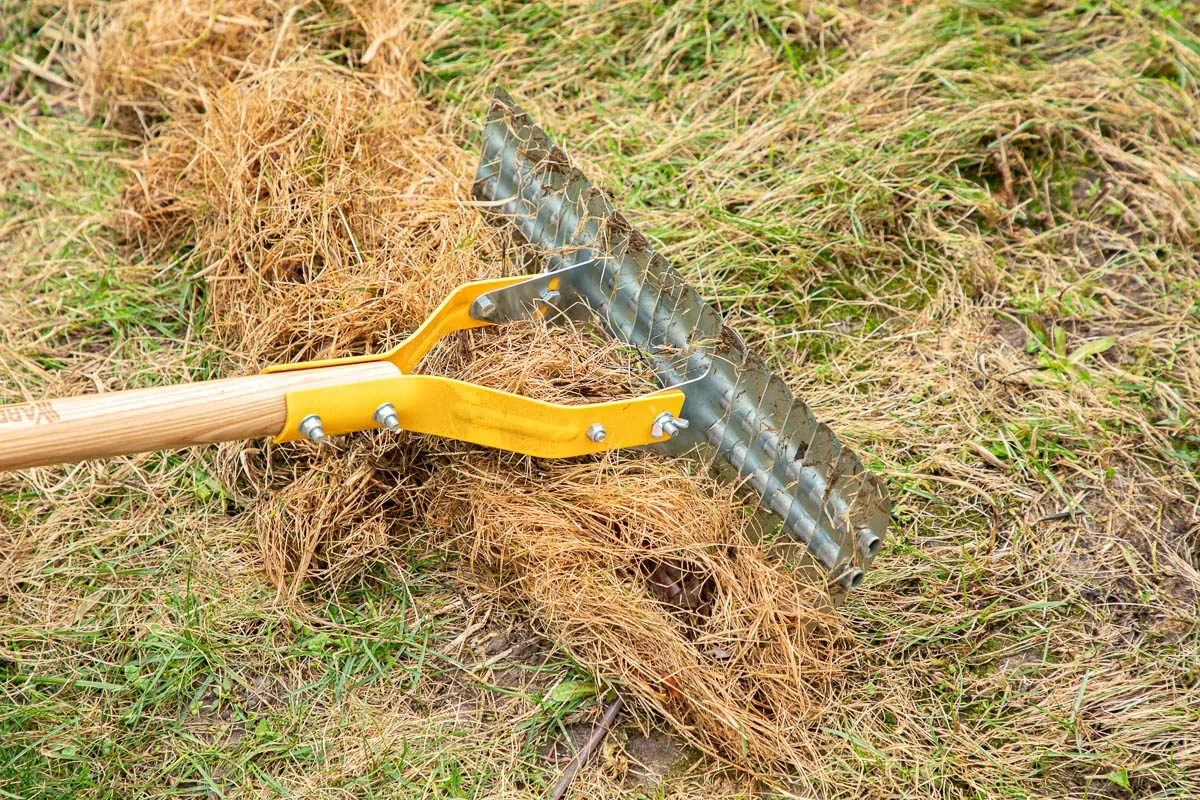
- Stiff rake or dethatching rake
- Hand cultivator, garden weasel tool, or shovel for loosening soil
- Grass seed that matches your lawn type (or a sun or shade blend suited to the spot)
- Compost or screened topsoil (enough for a thin layer)
- Starter fertilizer (optional)
- Straw or an erosion control blanket (optional, great for hot or sloped spots)
- Hose with a gentle spray nozzle or sprinkler
If the patch is large, a broadcast spreader can help keep seed distribution even. For small spots, a hand spread is fine.
Step-by-step: reseed a dead patch
1) Define the patch and remove the dead layer
Rake the dead area aggressively until you remove the brown mat of dead blades and thatch. Keep going until you can see soil and feel that the surface is not spongy with dead material.
Goal: seed must touch soil, not old straw-like turf.
2) Loosen the top 1 to 2 inches of soil
Use a hand cultivator, weasel tool, or the tip of a shovel to scratch up the top layer. Break up crusted soil and create a crumbly surface.
- If the soil is hard like a path, compaction is part of the problem.
- If water puddles there, you may need to improve drainage before reseeding.
3) Add a thin layer of compost or topsoil
Spread about 1/4 inch of compost or screened topsoil over the patch, then lightly rake it in. This gives seed a better bed and helps hold moisture.
Skip thick layers. Burying seed too deep is a common failure point.
4) Use seed that matches your lawn
This is the quiet reason some patches never blend. Try to match what is already growing so color, texture, and growth habit stay consistent.
- Cool-season lawns: common mixes include fescue, ryegrass, and sometimes Kentucky bluegrass.
- Warm-season lawns: Bermuda, zoysia, and similar grasses behave differently than cool-season seed.
Quick compatibility tip: avoid overseeding a warm-season lawn with a cool-season grass unless you truly want a mixed lawn with different watering and mowing needs.
5) Spread seed at the right rate
Follow the seeding rate on the bag. In patches, people often go too heavy, creating weak, crowded seedlings that struggle later.
To distribute evenly:
- Spread half the seed walking north-south, then the other half east-west.
- Feather the edges into the surrounding healthy grass so the repair blends.
6) Press seed into the soil
Seed needs firm contact with soil particles. After spreading:
- Gently rake to mix seed into the top 1/8 inch of soil, or
- Walk over the area in flat shoes to press seed down, or
- Use a lawn roller if you have one (light pressure only).
7) Cover lightly (do not bury it)
Cover the seeded area with one of the following:
- Very light straw (you should still see soil through it)
- A dusting of compost or topsoil (just enough to reduce drying)
- An erosion control blanket for slopes or places that wash out
Covering is not about burying the seed. It is about keeping the surface from drying out and stopping seed from blowing away or being eaten.
Rule of thumb: most lawn seed should be covered no more than about 1/4 inch.
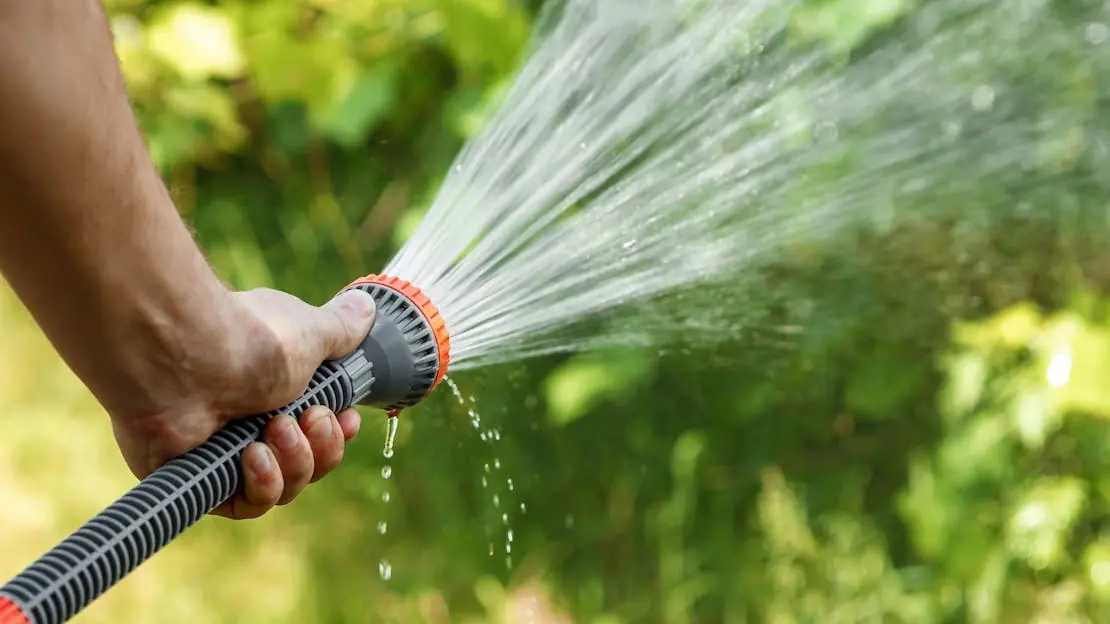
8) Water like a seed, not like a lawn
This is the make-or-break step.
- Days 1 to germination: Mist or gently water often enough that the surface stays consistently damp. In sunny, warm, or windy conditions, that is often 1 to 3 times per day.
- After sprouting: Water less often, but a bit deeper, encouraging roots to follow moisture down.
- After the new grass is established: Transition to normal lawn watering.
Important: Avoid blasting the patch with a strong spray that makes puddles or channels. You want damp soil, not standing water. Puddles can wash seed out and can also lead to seedling failure from damping-off or other disease issues.
How long does it take to sprout?
It depends on seed type, temperature, and moisture, but these are common ranges under decent conditions:
- Ryegrass: often 5 to 10 days
- Tall fescue: often 7 to 14 days
- Fine fescue: often 10 to 21 days
- Kentucky bluegrass: often 14 to 30 days
If you are watering correctly and still see nothing after the typical window, the seed may have dried out mid-germination, washed away, or the soil conditions may still be unfriendly.
Keep feet, pets, and mowers off it
New seedlings are easy to crush and uproot. If possible:
- Rope off the area or use small stakes as a reminder.
- Redirect foot traffic for a couple of weeks.
- Hold off mowing until the new grass is ready.
First mow tip: mow the new grass when it reaches about 3 to 4 inches tall, and only cut off the top 1/3. Mow high and use a sharp blade. A dull blade can tug tender seedlings out of the soil.
Fix the reason the patch died
If patches repeat in the same places, look for a pattern.
Compaction
Common along paths, play areas, and where people cut corners. Loosening soil helps, but long-term compaction may call for aeration.
Drainage and runoff
If water pools or funnels across the spot, seed can fail from washout or prolonged saturation. Sometimes the bigger win is directing water away from trouble zones. A good companion read is Downspout Extensions That Keep Water Away From Your Foundation.
Too much shade
If the area gets limited sun, use a shade-tolerant mix and mow the surrounding grass a touch higher so it does not outcompete the seedlings.
Pet urine spots
Flush with water right away when possible, and consider reseeding with a more durable turf type for that area. If urine damage is frequent, rotating the pet’s route helps more than reseeding again and again.
Grubs or insects
If the turf peels back like a loose carpet and you see C-shaped grubs in the soil, address that issue before reseeding, or the new roots can be damaged too.
Common reseeding mistakes
- Skipping dethatching. Seed on top of a dead mat often fails.
- Not pressing seed into soil. Good contact is the difference between sprouting and drying out.
- Watering too heavily, too rarely. In warm, sunny, or windy weather, the surface often still dries between waterings.
- Overcovering. Seed buried too deep struggles to emerge.
- Using whatever seed is on hand. Mismatched seed can look patchy and behave differently than your existing lawn.
- Overdoing starter fertilizer. More is not better. Follow label rates and be extra careful near storm drains, lakes, and streams.
Quick patch recipe (small spots)
For a bare spot about the size of a dinner plate to a doormat:
- Rake out dead grass until you see soil.
- Scratch the top inch with a hand cultivator.
- Add a handful or two of compost and rake it in.
- Sprinkle seed lightly and evenly.
- Press with your shoe to firm seed to soil.
- Dust with a pinch of compost or a whisper of straw (keep coverage under about 1/4 inch).
- Mist as needed to keep the surface damp until sprouted.
More yard fixes for healthier grass
If lawn patches are showing up because water is heading where it should not, these projects can help the whole yard behave better:
- Gutters Overflowing in Heavy Rain: Causes and Fixes
- Slope Soil Away From Your Foundation
- Downspout Extensions That Keep Water Away From Your Foundation
Steady soil moisture where you want it, and less water where you do not, makes everything outside easier to maintain.
The 30-second cheat sheet
The key points from this guide, in one place.
- Do not just throw seed on a dead spot. First remove matted thatch so seed can touch soil.
- Loosen the top 1 to 2 inches of soil to fight compaction and help roots establish.
- Add a thin layer of compost or screened topsoil (about 1/4 inch) to hold moisture and improve the seed bed.
- Use seed that matches your lawn type. Mixing grass types can create a patchy look and different mowing and watering needs.
- Spread seed at the labeled rate and feather edges into surrounding grass for a natural blend.
- Press seed into the soil. Light raking plus walking it in is often enough. Soil contact is critical.
- Cover lightly with a dusting of compost or a thin layer of straw. Most lawn seed should be covered no more than about 1/4 inch.
- Water gently and frequently (often 1 to 3 times a day in sunny, warm, or windy weather) so the surface stays consistently damp until germination.
- Avoid puddles. You want “damp,” not “soaked,” so seed is not washed out and seedlings are less likely to fail from disease.
- Protect the patch from foot traffic, pets, and mowing until seedlings are established.
- If patches keep returning, fix the cause (compaction, shade, pet urine, grubs, or drainage/runoff).