

Jump to the 30-second cheat sheet for the key points.
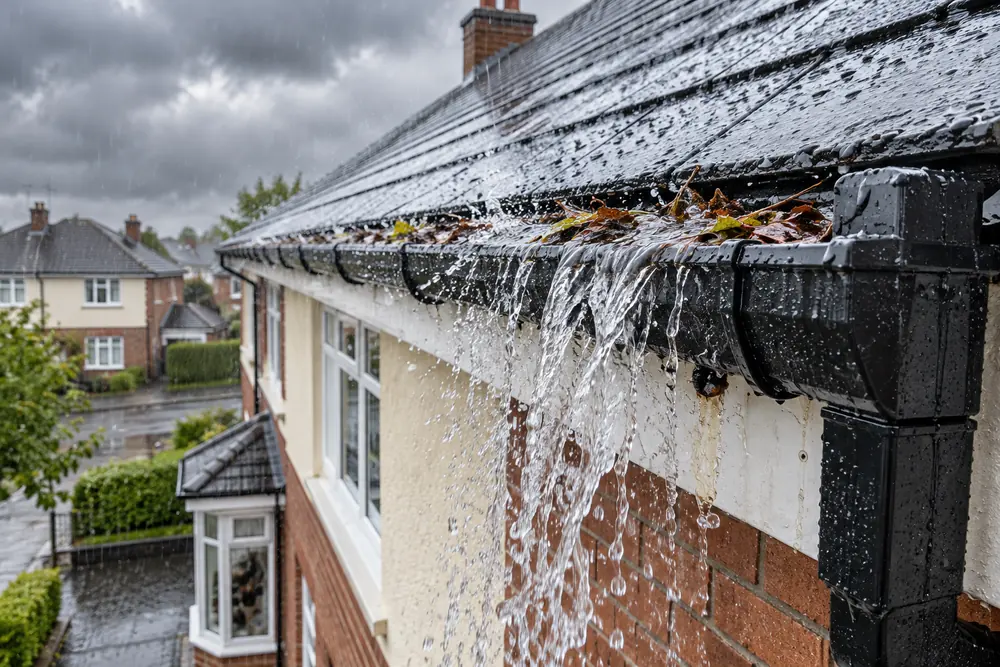
When it really pours, your gutters turn into a waterfall. Water sheets right over the front edge and hits the ground next to the house like the gutter is not even there.
The reassuring truth is that most overflow problems come down to a few fixable issues: a clog, the gutter pitched the wrong way, too few or too-small downspouts, or roof water shooting past the trough at a valley. With a safe check from the ground and a careful ladder look, you can pinpoint the cause and fix it before your foundation and basement take the hit.
At a glance
- What it usually is: A clog at the outlet, a low spot in the gutter run, or a downspout that cannot move water fast enough.
- What it means: Roof runoff is landing too close to the foundation, which can drive basement moisture, fascia rot, and siding staining.
- Do first: Check for simple blockages and safely flush the gutter and downspouts with a hose.
- Do second: Confirm the gutter pitch and look for overshooting at roof valleys and fast roof runoff.
- Also check: Crushed downspouts or clogged underground drain lines (if your downspouts disappear into the ground).
- When to worry: Overflow at multiple sections, sagging gutters, water behind the gutter, or any signs of basement seepage or rotted fascia.
What is going on
Why gutters overflow in a downpour
Your gutter has one job: catch roof runoff and move it sideways to a downspout, then down and away from the home. In heavy rain, the volume can be huge.
If water cannot enter the trough cleanly, cannot flow to the outlet, or cannot drain fast enough through the downspout, it piles up and spills over the front.
Overflow can happen even if your gutters look fine in light rain. A system can handle drizzle but fail when the roof sheds water at full speed.
Why it matters for your foundation and exterior
When overflow lands right next to the house, it saturates the soil at the foundation line. Wet soil pushes more moisture against basement walls and crawlspaces. It can also:
- Trigger basement leaks or dampness, especially after repeated storms. If this is already happening, the moisture guidance in Basements & Moisture is a helpful next step.
- Erode soil and create low spots that slope toward the house.
- Rot fascia boards and soffits when water runs behind the gutter.
- Stain or damage siding and trim, especially wood and fiber cement.
- Damage landscaping and splash mud onto walls and windows.
Safety first, always
Gutter work is ladder work, and ladder work can go sideways fast. Follow all product labels, use safe ladder practices, and follow local codes where they apply. Hire a licensed professional for roof-height work, structural repairs, or anything that feels unstable.
- Do not climb on a wet roof.
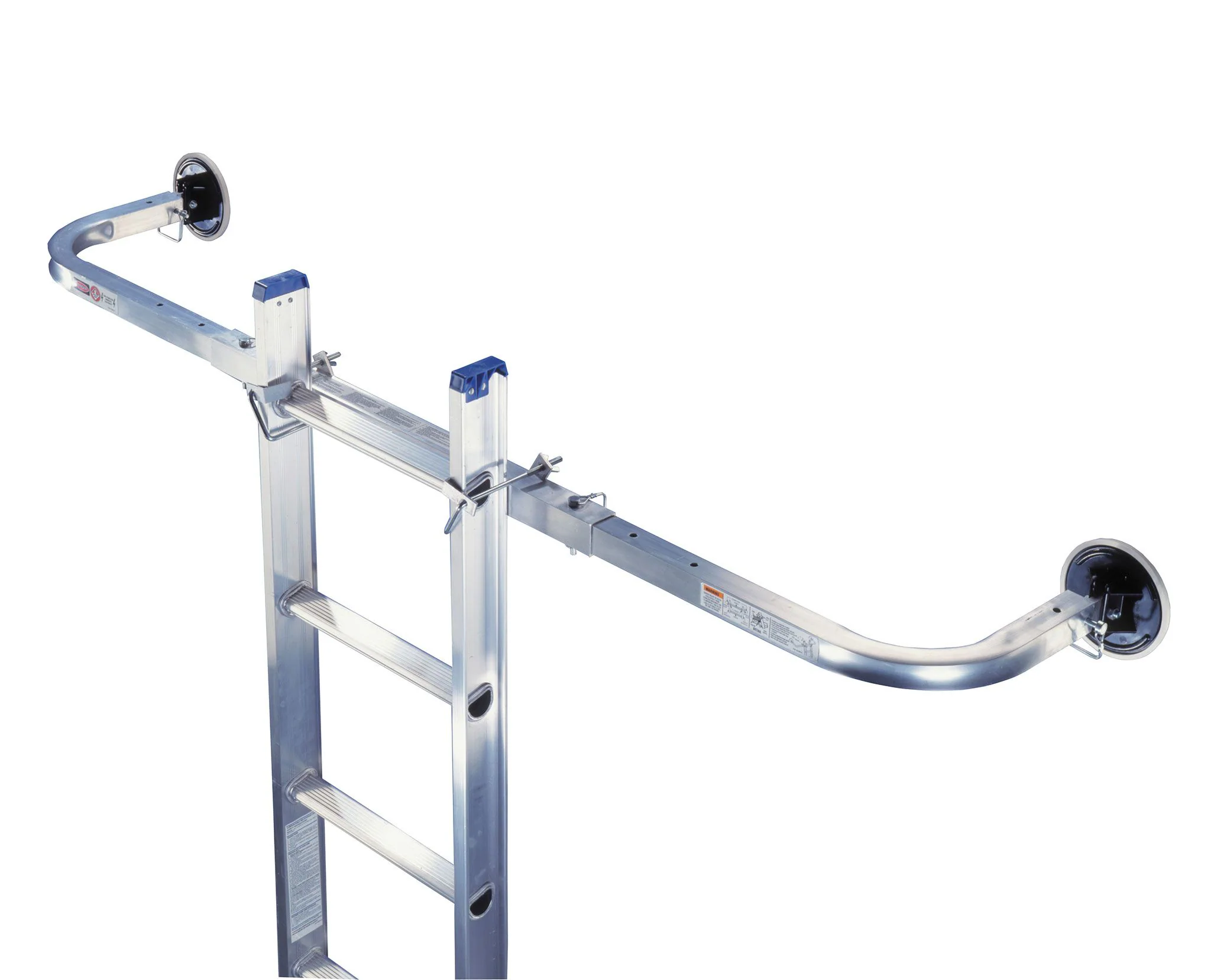
- Avoid placing ladder weight on the gutter. Use a ladder standoff or stabilizer that bears against the wall or fascia, not the trough.
- Keep clear of overhead power lines.
- Wear eye protection and gloves. Gutter debris can hide sharp screws and gritty sludge.
The common causes
Cause 1: A clog in the gutter or downspout
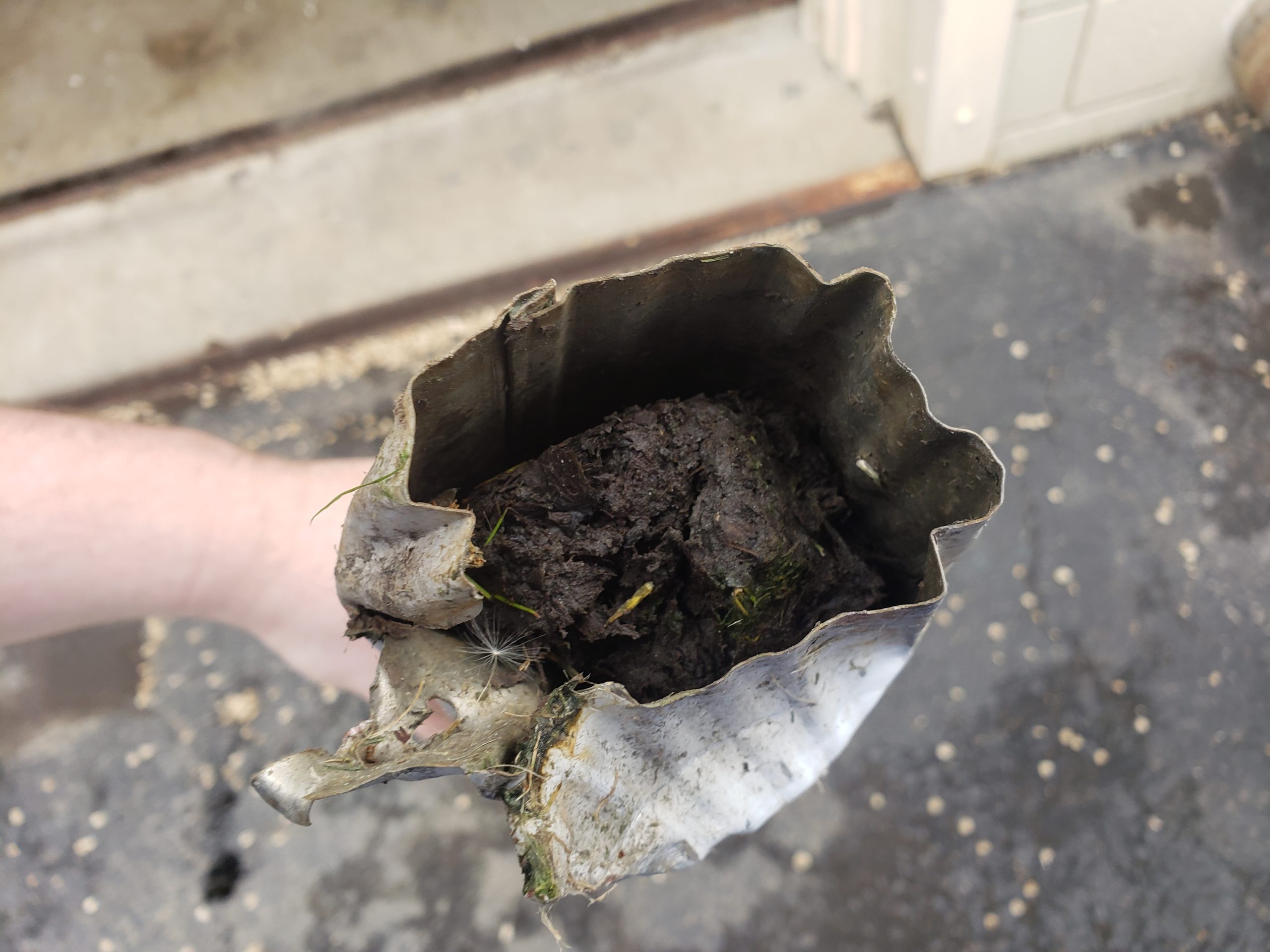
Leaves and roof grit build up, then wash into a clump that blocks the outlet or a downspout elbow. The gutter fills like a bathtub, then spills over the front edge. This is the most common cause.
Typical clues:
- Overflow is worst near one downspout.
- Water spills at the end cap or a seam.
- You see plants or dark sludge in the trough.
- The downspout dribbles even during heavy rain.
Cause 2: The downspout is crushed, kinked, or blocked underground
Even with a clean gutter, water cannot drain if the downspout is pinched, dented, or clogged. Another common bottleneck is an underground drain line that is packed with silt, roots, or roof grit.
Typical clues:
- The downspout looks dented from a ladder, mower, or impact.
- Your downspout ties into an underground line, but discharge at the outlet is weak or intermittent.
- The gutter overflows fast during a hose test even though the trough is clean.
Cause 3: The gutter pitch is wrong or the run has a low spot
Gutters are supposed to tilt slightly toward the downspout so water moves out instead of sitting. If hangers loosen, fascia wood swells, or the gutter was installed nearly level, water can pool in the middle and overflow there first.
Typical clues:
- Overflow happens in the middle of a long run.
- You notice standing water hours after rain.
- The gutter looks wavy instead of a clean, straight line.
Cause 4: Undersized gutters or not enough downspouts
Sometimes the gutter is doing its best, but the system is simply too small for the roof area and the intensity of your storms. This often shows up on larger roofs, steep roofs, or homes with long gutter runs that feed only one downspout.
Typical clues:
- Gutters are clean and pitched correctly, but still overflow in heavy rain.
- Overflow happens along much of the run, not just one spot.
- The downspout outlet gushes hard, or the downspout itself seems to back up.
Cause 5: Roof valley overshoot or fast roof runoff
A roof valley concentrates water. In heavy rain, water can come off the roof as a fast sheet that shoots past the gutter. This is especially common when:
- The gutter is hung a bit low.
- The roof has a steep pitch.
- There is a metal valley flashing sending water in a tight stream.
- Shingles or drip edge geometry kicks the flow outward.
Typical clues:
- Overflow happens right under a valley, even when the gutter is clean.
- You see water jumping the gutter during a storm.
- Splash marks appear on the ground or siding below that valley.
Cause 6: Winter issues (ice dams and frozen downspouts)
This article focuses on rain events, but winter can create a similar overflow look. Ice can dam water at the roof edge or freeze inside a downspout, forcing meltwater to spill over the gutter or back up under shingles.
Typical clues:
- Overflow happens during thawing, not during rain.
- Icicles form along the gutter line or a downspout feels solid with ice.
- Leaks show up near the roof edge inside the house.
How to narrow it down
Clog vs wrong pitch
A clog usually causes water to back up starting at the downspout outlet or an elbow. A pitch problem often shows up as overflow in the middle of the run or standing water after the rain.
From the ground, look for:
- Clog hint: One downspout is barely draining while others flow strong.
- Pitch hint: The gutter line looks like it dips between hangers.
Pitch problem vs fascia or hanger failure
These are close cousins. A pitch problem can be caused by hangers that pulled loose or rotted fascia that no longer holds fasteners. If you see the gutter pulling away from the roofline or the back edge sitting low, do not just crank on the hangers and hope. The wood behind may need repair.
Watch for:
- Gutter separating from the fascia.
- Water running behind the gutter (a red flag for fascia rot or flashing or drip-edge issues).
- Rusty fasteners, soft wood, peeling paint.
Undersized downspout vs clogged downspout
A clogged downspout often shows as a sudden overflow at the outlet area and a weak dribble at the bottom. An undersized downspout can still discharge hard, but the gutter overflows anyway because the inflow exceeds the outflow.
Easy check during a hose test:
- If water backs up quickly when the hose is placed near the outlet, suspect a clog or bottleneck downstream.
- If the downspout drains but the gutter still over-tops when you simulate heavy flow, suspect capacity.
Overshoot vs clogged gutter
Overshoot happens even with a clean gutter and a clear downspout, usually at a valley. The giveaway is water visibly jumping the gutter in a concentrated stream.
If you cannot observe it during rain, you can often spot it afterward by:
- Splash patterns on the ground directly below the valley.
- A clean “washed” stripe on the siding where water hits repeatedly.
- Eroded mulch or a small trench near the foundation line.
How to check each safely (ground checks first)
Start from the ground. Many problems are visible without climbing.
- During rain (from a doorway): Note exactly where overflow starts. One spot, the middle, or under a valley?
- After rain: Look for soil erosion, splash marks, and puddles near the foundation.
- Downspout discharge: Is water coming out strongly, weakly, or not at all?
- Gutter line: Stand back and sight along the gutter. Does it sag?
- Downspout condition: Look for dents, crushed elbows, or a connection into an underground line that might be blocked.
If you do use a ladder, keep it on firm level ground, maintain three points of contact, and have a helper when possible. Never reach so far that your belt buckle passes the ladder side rail. Move the ladder instead.
Fixes in the right order
Step 1: Clean the gutters and flush the system
Even if you suspect another issue, start here. Cleaning is the cheapest fix and it makes every other diagnosis more accurate.
Tools and supplies:
- Work gloves and eye protection
- Scoop or small trowel
- Bucket or heavy trash bag
- Garden hose with a spray nozzle
- Optional: plumber’s snake for downspouts (used carefully)
What to do:
- Clear debris from the gutter, especially near downspout outlets.
- Check that the outlet hole is not packed with mud or shingle grit.
- Flush the gutter with a hose starting at the end farthest from the downspout, pushing water toward the outlet.
- Flush the downspout from the top if possible. If it backs up, the clog may be in an elbow, a crushed section, or an underground line. A downspout section may need to be disconnected and cleared.
Time and rough cost: 1 to 3 hours for many homes; low cost if DIY. Professional cleaning costs vary a lot by height, access, and gutter length, but it is often in the low hundreds of dollars for a typical house.
Step 2: Confirm the pitch and fix sags
Gutters need a slight slope toward the downspout. Many installers aim for a small, steady fall, often described as about 1/4 inch over 10 feet. Exact targets vary by manufacturer, gutter size, and what looks acceptable on the fascia line.
How to check pitch:
- After cleaning, run water from a hose into the gutter and watch whether it moves to the downspout or pools.
- Look for low spots where water lingers.
- If safe and accessible, use a level. You want a gentle tilt toward the downspout, not a dramatic slope.
How to re-pitch:
- Work in small adjustments. Move one hanger at a time.
- Tighten or replace loose hangers so the gutter sits firmly.
- Raise the low section or slightly lower the high end to create a continuous fall.
- If the fascia wood is soft or fasteners will not bite, stop and plan for fascia repair. Tightening into rotten wood is like trying to screw into oatmeal.
Time and rough cost: Often 1 to 2 hours for a single run. Hangers and screws are usually inexpensive. If fascia repair is needed, costs can rise quickly because it may involve trim, flashing, and paint.
Step 3: Fix bottlenecks (crushed downspouts and underground drains)
If the gutter fills quickly but the downspout output is weak, do not jump straight to bigger gutters. Make sure the water has a clear path out.
- Replace dented sections that visibly restrict flow.
- Check elbows for packed debris, especially at the bottom bend.
- If you have an underground drain, watch whether it takes water during a hose test. If it backs up, it may need a professional cleanout.
Step 4: Add a downspout or enlarge the downspouts
If your gutters are clean and pitched correctly but overflow during heavy rain, you may need more drainage capacity.
Common capacity upgrades:
- Add another downspout on long runs. This shortens the distance water must travel in the gutter.
- Enlarge downspouts (for example, moving from a smaller size to a larger size) so they can carry more water.
- Upgrade the outlet from the gutter into the downspout so it is not a bottleneck.
Quick sizing reality check: Many homes have 5-inch K-style gutters with 2x3 downspouts, and upgrading to 6-inch gutters and 3x4 downspouts is a common move in heavy-rain areas or on big roof sections. Your roof area, pitch, and local rainfall intensity matter, so use this as conversation fuel, not a universal rule.
How to spot “needs more downspout” from the ground:
- A very long gutter run feeds only one downspout.
- The downspout outlet gushes, yet overflow still happens along the run.
- Overflow occurs at the far end from the downspout first.
Time and rough cost: Adding a downspout is often a half-day project for a pro. Costs vary widely by height, material, and complexity, but it is commonly a few hundred dollars per downspout. If you need new underground drain routing, costs increase.
Tip: If you are not sure what size system you need, a gutter contractor can size gutters and downspouts based on roof area, pitch, and local rainfall intensity.
Step 5: Stop valley overshoot
When a roof valley shoots water past the gutter, cleaning will not solve it. You need to keep that concentrated stream in the trough.
Fix options (in increasing “call-a-pro” territory):
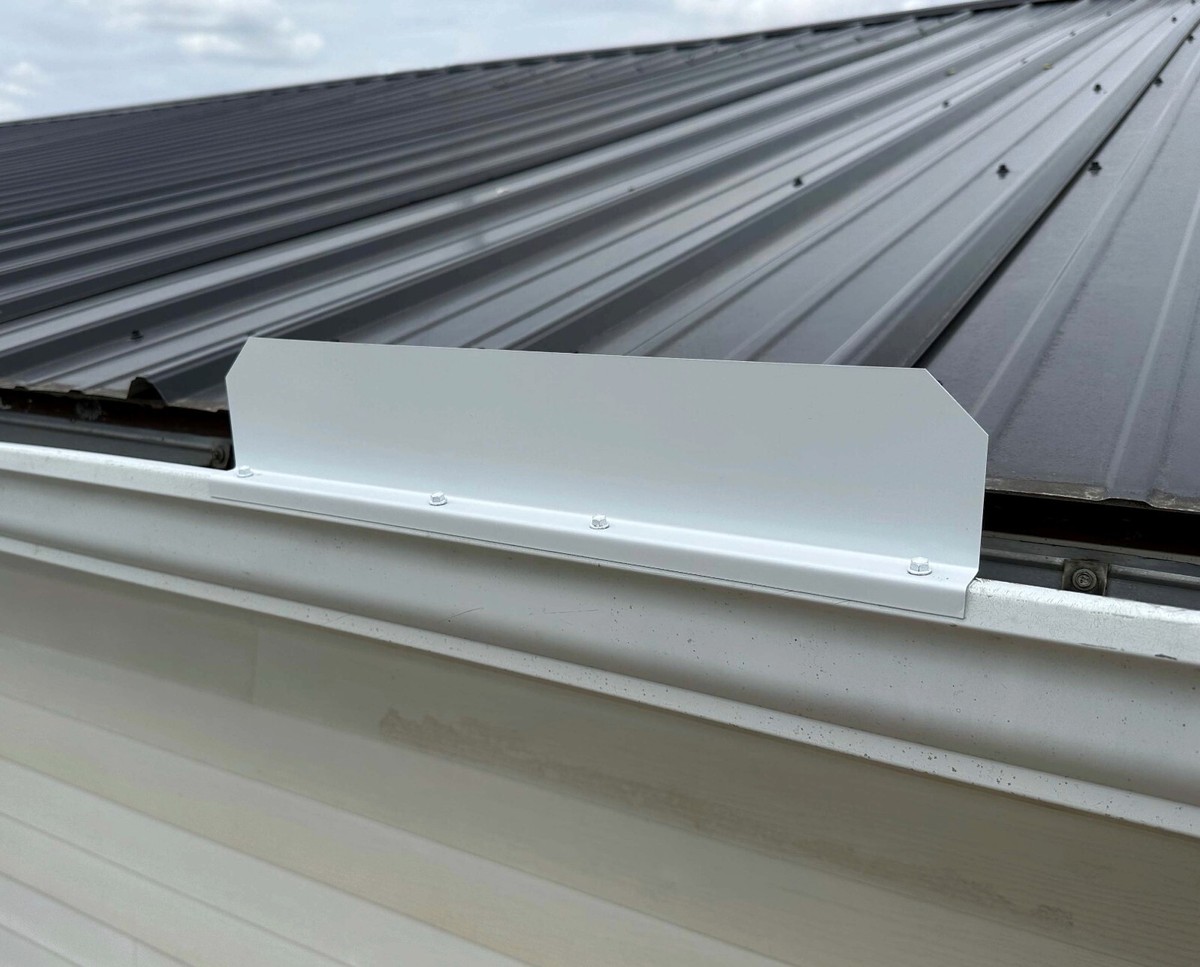
- Splash guard: A small vertical deflector installed inside the gutter at the valley area to prevent water from blasting over the front edge.
- Adjust gutter height: Sometimes lifting the gutter slightly at the valley helps it catch the stream, but do not raise it so high that shingles dump behind it.
- Check drip edge and flashing: If water is getting behind the gutter, the drip edge or flashing detail may be wrong or damaged.
Time and rough cost: Splash guards are typically inexpensive parts, with cost mostly in labor and safe access. Plan on 30 to 90 minutes for a simple install once access is set up.
Step 6: Carry water away from the foundation
Even perfectly working gutters can still harm a foundation if downspouts dump right at the base of the wall. The fix is to move discharge away so the soil next to the foundation can stay relatively dry.
Good options:
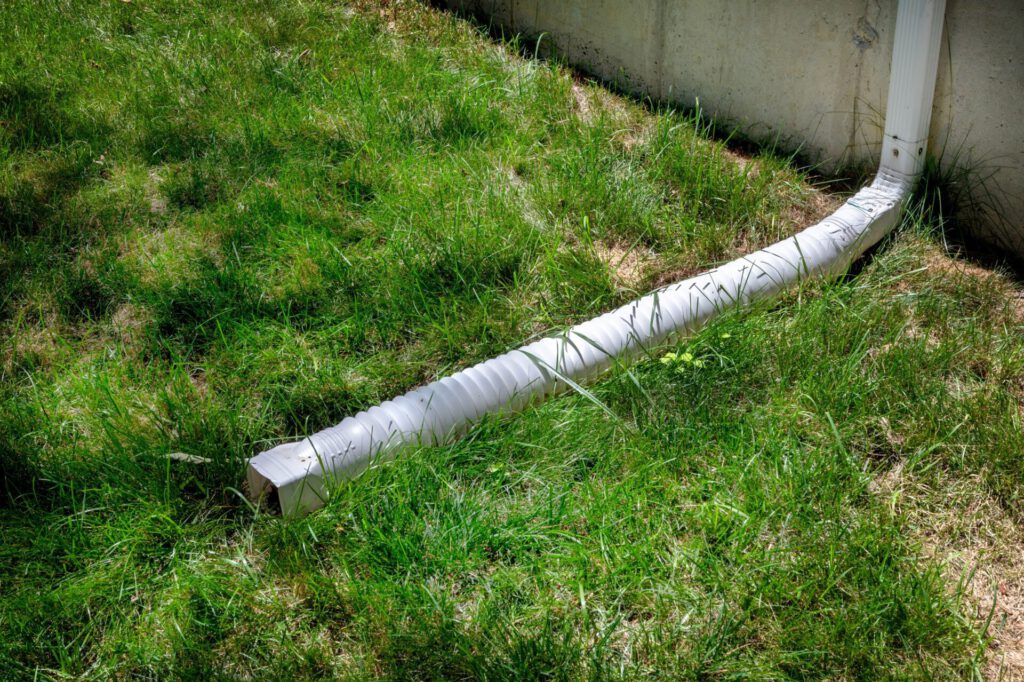
- Downspout extensions: Aim to discharge at least 4 to 6 feet away from the foundation when practical. More distance is even better if the grade sends water back toward the house.
- Sloped splash blocks: Helpful where an extension is not practical, but they must direct water away, not sideways into a low spot.
- Buried drain line: A solid pipe or an approved drainage system that carries water to daylight away from the home, or to another legal discharge point.
- Regrade the soil: Make sure the ground slopes away from the foundation so runoff does not return.
Important: Follow local codes and rules for stormwater discharge. Never route water into a sanitary sewer or toward a neighbor’s property.
If you are also tracking basement dampness, pairing gutter fixes with the moisture basics in Basements & Moisture can help you prioritize what to address first.
What not to do
- Do not install gutter guards as a “mystery fix”. Guards can help with leaf load, but they will not correct bad pitch, undersized downspouts, crushed downspouts, or valley overshoot. Some styles can even make overshoot worse by changing how water enters the gutter.
- Do not blast clogs with a pressure washer from the ladder. Kickback plus wet footing is a bad mix.
- Do not seal everything with caulk. Overflow is usually a flow problem, not a leak-through problem. Sealing seams will not help a gutter that is filling up.
- Do not let downspouts dump at the foundation just because it is convenient. That is where you least want all that water.
- Do not ignore water behind the gutter. That points to fascia, flashing, or drip-edge issues and can lead to rot.
When to call a gutter contractor: Call for help if your gutters are on a steep roofline, above a second story, pulling away from the fascia, visibly sagging, or if you suspect rotted fascia or flashing problems. Also call if overflow is widespread even after cleaning, which often means a sizing or design issue.
Quick decision guide
If it overflows near a downspout
Clean the gutter and flush the outlet and downspout first. If the downspout still drains weakly, check for a crushed section, clear the elbows, and consider whether an underground line is blocked.
If it overflows in the middle
Check for a sag or low spot and re-pitch the hangers toward the downspout. If the gutter line is wavy or pulling away, inspect for loose fasteners or fascia damage before tightening.
If it only overflows under a valley
Look for overshoot. A splash guard at the valley is often the simplest fix. If water is running behind the gutter, stop and have the flashing or drip edge evaluated.
If it happens during thawing
Suspect ice. A frozen downspout or an ice dam can force meltwater to overflow. If you see interior leaks near the roof edge, treat it as urgent.
FAQ
Can heavy rain overwhelm normal gutters even if they are clean?
Yes. A clean system can still overflow if the gutter size or downspout capacity does not match your roof area, roof pitch, and rainfall intensity. Adding another downspout or upsizing components is often the real fix.
How can I tell if my downspout is clogged without taking it apart?
During a hose test, water will back up quickly at the outlet area and the downspout discharge will be weak or absent. In real rain, the gutter may overflow near the downspout while that downspout barely flows compared to others.
What if my downspout goes underground?
If your downspout disappears into the ground, treat the underground line like part of the downspout. If it is blocked, the gutter can overflow even when the trough is clean. A hose test that backs up is a strong clue.
Is overflowing gutters a basement problem or a yard problem?
It is both. Overflow drops a lot of water right at the foundation line, which can push moisture into basements and crawlspaces and also erode soil outside. If you are seeing dampness indoors, treat gutter overflow as a priority repair.
Do I need bigger gutters or just more downspouts?
Sometimes more downspouts solve the issue by letting water exit faster, especially on long runs. Bigger gutters can help when water is simply spilling over the front edge because the trough cannot catch and hold the flow. A contractor can size both pieces correctly if the cause is not obvious after cleaning and pitch checks.
The bottom line
Overflowing gutters in heavy rain are not just annoying. They can soak siding, rot fascia, and keep your foundation soil waterlogged, which invites basement moisture.
Start with the simple wins: clean and flush, then confirm pitch. After that, check for bottlenecks like crushed downspouts or clogged underground lines. If the system is still overwhelmed, add capacity with more or larger downspouts, stop valley overshoot with splash guards, and always carry water well away from the house. One little fix at a time, you can turn that waterfall back into a well-behaved drain path.
More helpful reading: If water is already showing up indoors, browse Basements & Moisture. For related upkeep costs that surprise many homeowners, see Hidden Home Maintenance Costs.
The 30-second cheat sheet
The key points from this guide, in one place.
- Find the overflow spot: During rain, note whether it spills near one downspout, mid-run, or directly under a roof valley.
- Do the cheapest fix first: Scoop debris, then hose-flush the gutter toward the outlet and confirm the downspout discharges strongly.
- Rule out a downspout clog: If the gutter backs up fast during a hose test and the downspout dribbles, clear the elbow or disconnect and clean.
- Check pitch and sags: Look for low spots and lingering water after rain; re-seat and adjust hangers toward the downspout (a slight drop is the goal, often cited as about 1/4 inch over 10 feet, but it varies by system).
- Increase capacity if needed: If gutters are clean and pitched but still overflow in downpours, add another downspout or enlarge downspouts.
- Fix valley overshoot: If overflow is only under a roof valley, add a splash guard and verify water is not running behind the gutter.
- Move water away from the house: Extend downspout discharge at least 4 to 6 feet from the foundation (more is better when you can) and keep the ground sloped away.