

Jump to the 30-second cheat sheet for the key points.
One little fix at a time, we'll make your house a home!
If your gutters dump water right next to the house, that runoff can soak the soil along your foundation and invite puddles, damp basements, and messy erosion. The good news is that keeping water moving away from the house is usually a low-cost weekend project. Below are practical downspout extension options, from simple surface fixes to a basic buried line.
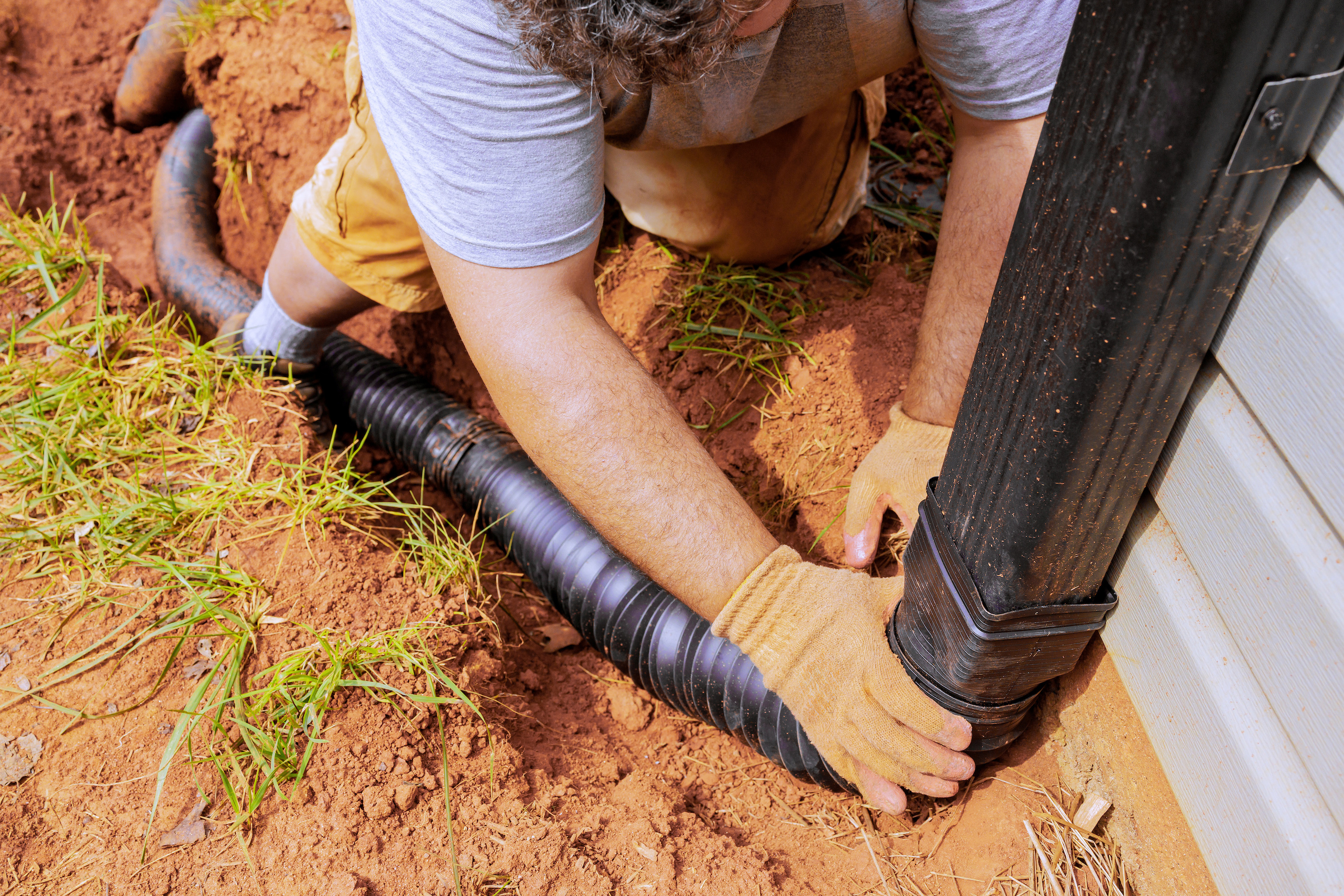
Quick goal: how far should downspouts send water?
A simple rule of thumb is to start by aiming runoff 4 to 6 feet away from the foundation, then adjust based on slope, soil, and where water is pooling. The main idea is to keep the soil right beside your walls from staying saturated after storms.
- Best case: water flows away naturally on a gentle slope and does not return toward the house.
- Watch outs: dumping water onto a walkway that drains back to the home, sending water toward a neighbor's yard, or creating an icy patch in winter. If you are unsure about discharge rules in your area, it is worth a quick check of local or HOA guidance before you trench or hard-pipe anything.
- Bonus fix: pairing extensions with proper grading helps a lot. If you suspect the soil slopes toward the house, see Slope Soil Away From Your Foundation.
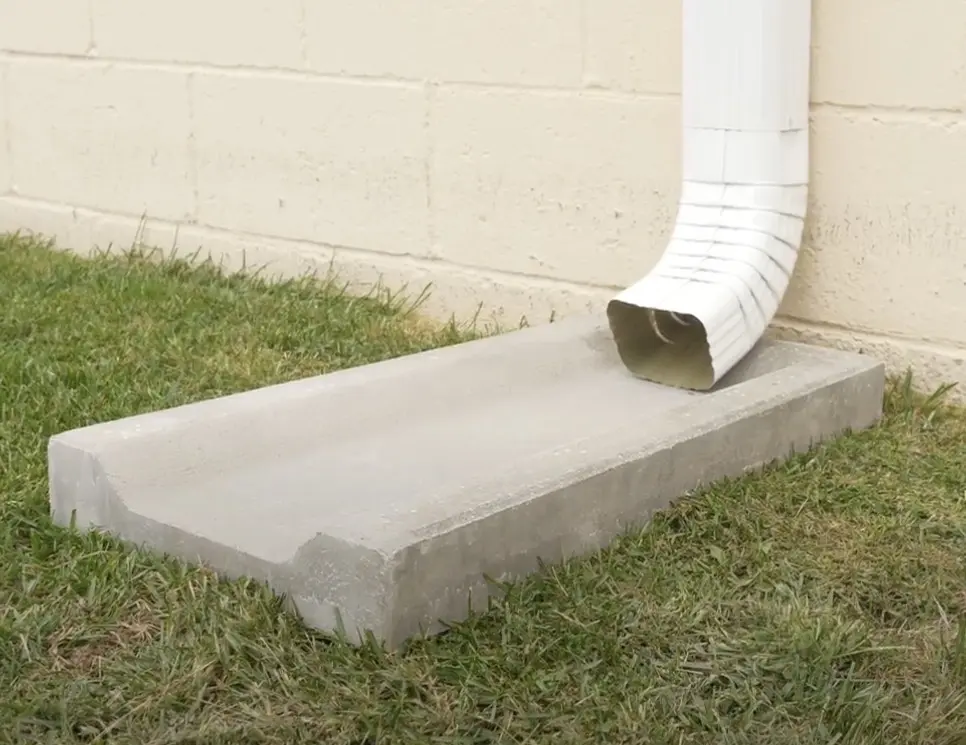
Option 1: Splash blocks (cheapest, fastest)
What it is: a small concrete or plastic ramp placed under the downspout to kick water away from the wall.
When splash blocks work well
- You already have decent slope away from the house.
- Your downspout ends low and close to the ground.
- You just need to stop the “waterfall hole” that forms under the outlet.
How to place one so it actually helps
- Set the block on firm ground so it does not rock or sink. Scrape away mulch first.
- Aim it downhill and away from the foundation. Even a small tilt matters.
- Extend the landing zone with a short piece of downspout (or a short extension) if the block still leaves water too close.
Common problems
- Water jumps off the sides: choose a wider block or add a longer extension first.
- Block sinks over time: reset it on compacted soil or a thin bed of gravel.
- Mowing trouble: plastic blocks can shift. Consider a stiffer option or a slightly recessed placement.
Option 2: Flexible roll-out drain sleeves (easy upgrade, good reach)
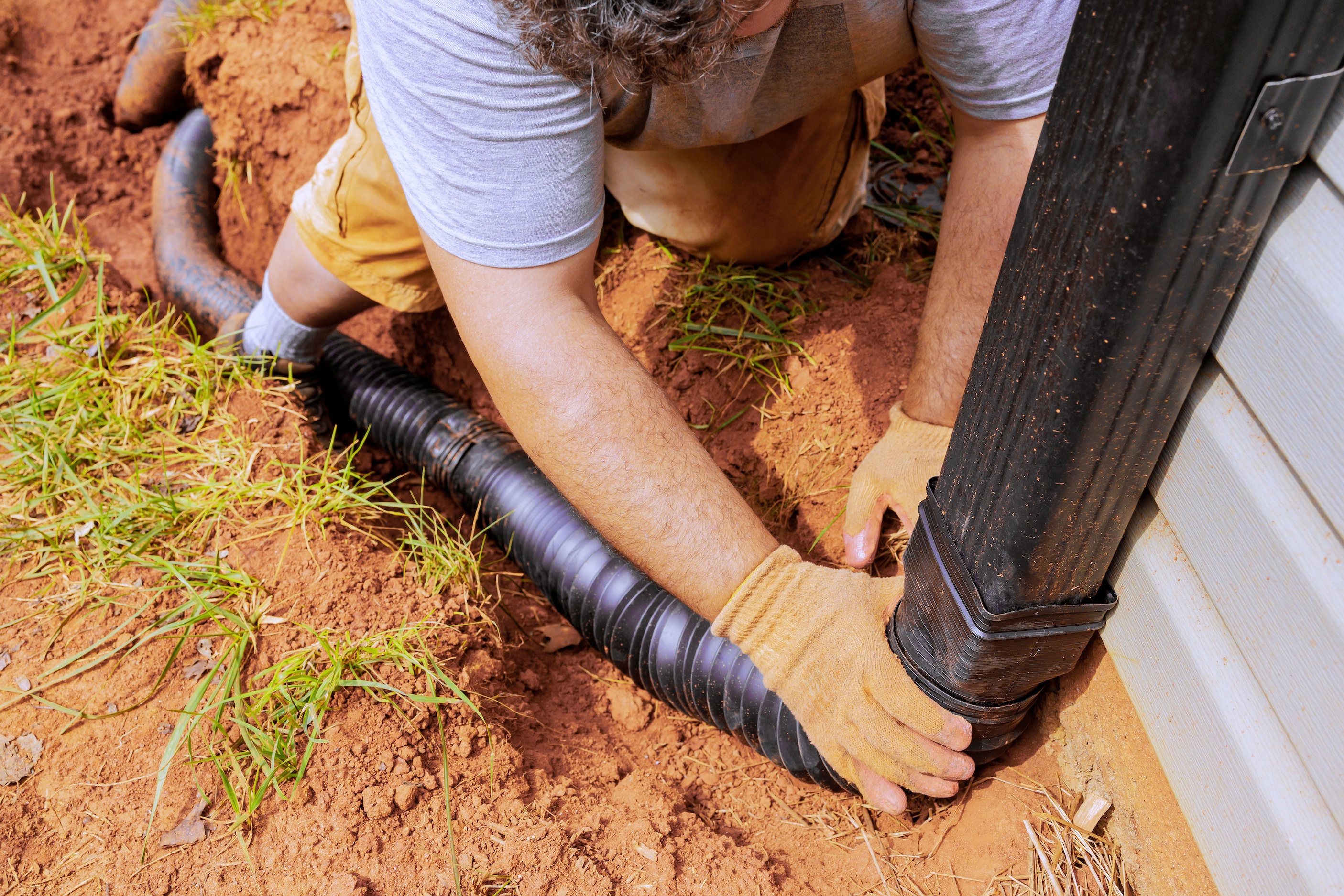
What it is: a flexible, usually corrugated extension that attaches to the downspout and rolls or bends to direct runoff farther into the yard.
Why homeowners like this option
- Fast install: often clamps or snaps onto the downspout outlet.
- Adjustable direction: easy to aim away from beds, patios, and walkways.
- More distance: pushes water farther than a splash block alone.
Tips for making it work better
- Keep the outlet end open and unobstructed. Leaves and mulch can block it.
- Create a stable landing spot. A small patch of gravel helps prevent muddy ruts where water exits.
- Use a strap or stake if it shifts. Some yards and storms make lightweight extensions wander.
When to be cautious with roll-out sleeves
- High foot traffic areas: they can be a tripping hazard.
- Freezing climates: water left inside can freeze and crack or damage some extensions, and it can create ice where it discharges.
- Very flat yards: water may still pond if there is no slope.
If you are seeing overflow during storms, the problem may start higher up. This guide can help you troubleshoot: Gutters Overflowing in Heavy Rain: Causes and Fixes.
Option 3: Buried PVC line (clean look, lowest maintenance)
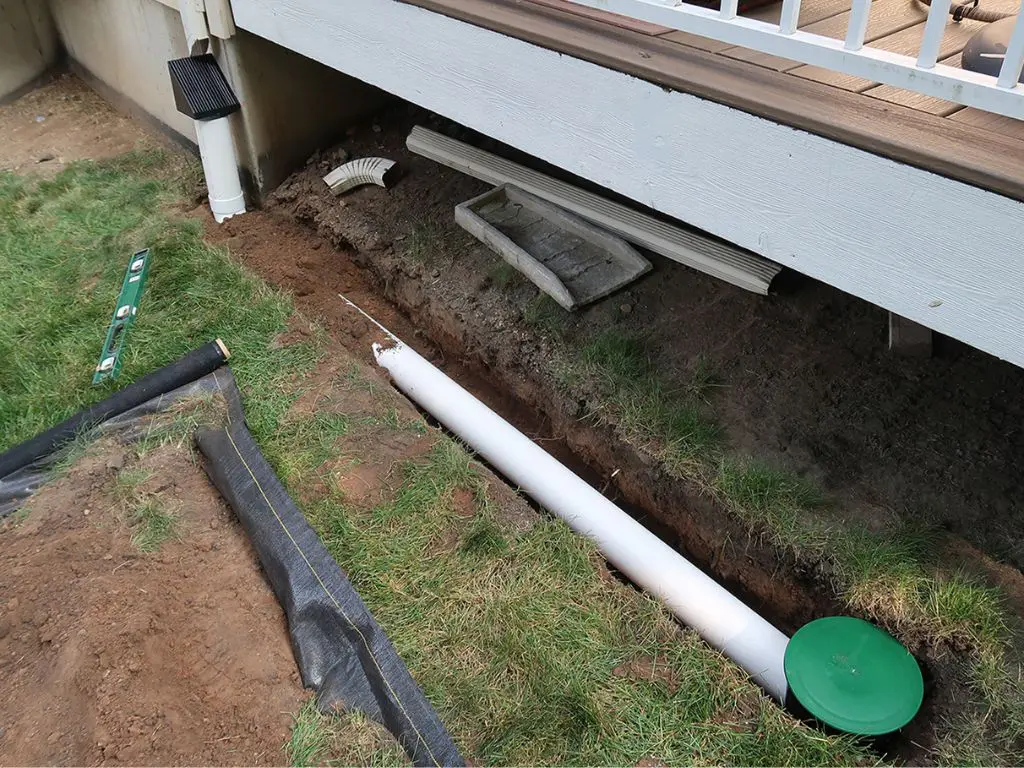
What it is: a downspout connects into a buried drain line that carries water to a safe discharge point farther from the house.
This is often the cleanest-looking, lowest-maintenance setup, but it is not no-maintenance. Buried lines can clog with shingle grit, small leaves, and sediment, and freeze ups can be a factor in cold climates. The key is giving the water somewhere to go and giving yourself a way to clear the line when needed.
Before you dig: the safety and planning checklist
- Call 811 before you dig. Utility marking is essential.
- Pick a discharge point first. Aim for a downslope area that can handle water without flooding, and avoid sending runoff onto a neighbor's property.
- Check local rules. Some areas regulate where roof runoff can discharge, especially near sidewalks, streets, and storm drains.
- Plan for slope. A gentle, consistent downhill run is the goal. A common baseline is about 1/8 inch per foot, but more consistent fall is better than chasing a perfect number.
- Choose a pipe size that forgives debris. Many DIYers use 4-inch PVC for better clog resistance, especially if your roof sheds a lot of grit.
- Have a clean-out strategy. Leaves and roof grit eventually show up, even with good gutters.
A simple weekend approach (not fancy, just practical)
- Disconnect the downspout at the bottom and add a downspout-to-drain adapter.
- Dig a shallow trench from the downspout to your discharge point, keeping a steady downward slope.
- Lay PVC (or a compatible drain pipe) and dry-fit the pieces before gluing so you can confirm the route.
- Add a pop-up emitter or elbow at the end so water exits on the surface rather than eroding an underground pocket.
- Backfill and tamp lightly, then test with a hose to confirm flow.
Small upgrades that prevent big headaches
- Add a debris screen at the gutter or keep gutters cleaned so the buried line stays clearer. Guards can help, but they still need periodic checks.
- Use a clean-out near the downspout so clogs are easier to clear.
- Consider a small catch basin or leaf filter at the downspout if you have heavy tree debris.
- Avoid routing under walkways unless you do it right. Crushing and settling can create low spots and clogs.
What not to do
- Do not tie roof runoff into a sanitary sewer line. Aside from being a bad idea for backups, it can be illegal in many areas.
- Do not terminate the line right next to the foundation. The whole point is distance.
- Do not create a low spot or trap. Even one sag can hold water and collect grit.
Option 4: Surface pipe run (sturdier than a sleeve)
What it is: a rigid extension (often plastic) runs along the ground to move water away. You can dress up the discharge area with a small gravel patch to reduce splash and mud.
- Pros: easier than burying pipe, more stable than a floppy sleeve, and easy to take apart to clean.
- Cons: visible in the yard, can be a trip hazard, still needs a good discharge spot.
How to make surface piping behave
- Lock the connections together. Use the manufacturer connectors or screws where appropriate so pieces do not pop apart during a heavy storm.
- Route it along a low-traffic edge. Tuck it along the side of a bed or the edge of the lawn so you are not stepping on it or hitting it with the mower.
- Stake it down if it walks. Simple landscape stakes or clips can keep it aimed where you want it.
- Protect the outlet area. A small gravel pad, splash pad, or flat stone helps prevent erosion and mud.
A handy variation: flip-up downspout extensions
If you want something you can lift out of the way to mow, a hinged flip-up extension can be a nice compromise between a short splash block and a long sleeve.
If you already have damp concrete walls in the basement, moving roof runoff away is an important first step before you spend money indoors. For next steps, see DIY Basement Waterproofing for Damp Concrete Walls.
How to choose the right extension
- Choose a splash block if you need a quick, cheap fix and your yard slopes away.
- Choose a roll-out sleeve if you want more distance without digging, and you can keep it out of walkways.
- Choose buried PVC if you want a clean look and reliable control, and you have a safe, legal place for water to exit downhill.
- Choose surface piping if you want something sturdier than a sleeve but are not ready to trench.
Mistakes that send water back to the house
- Discharging onto a driveway or patio that slopes toward the foundation.
- Burying a pipe with no outlet grade. Water needs a place to go.
- Discharging into mulch beds right next to the foundation. Mulch holds moisture and can hide pooling when the bed is flat or holds water.
- Ignoring overflowing gutters. Extensions cannot help if the gutter is spilling over the top.
- Ending too close to the house. If soil stays dark and wet near the wall after rain, increase the distance and improve slope.
- Sending runoff across a property line or onto a sidewalk. It can create neighbor problems and slippery, icy hazards.
FAQ
Do I need to bury the extension to protect my foundation?
Not always. Many homes do fine with a splash block or above-ground extension, as long as water consistently travels away from the foundation and does not pool. Start with 4 to 6 feet of distance, then go farther if the corner still stays wet.
Can I connect my downspouts to a buried pipe if I have trees nearby?
You can, but plan for maintenance. Leaves and roof grit can collect, and roots may be an issue depending on the discharge setup and pipe type. A clean-out near the downspout makes life easier, and a catch basin can help in heavy-debris areas.
What if my yard is flat?
Flat yards often need a longer run and a carefully chosen discharge spot, sometimes paired with regrading. If water sits near the foundation, consider starting with grading basics: Slope Soil Away From Your Foundation.
The 30-second cheat sheet
The key points from this guide, in one place.
- Goal: get gutter runoff to discharge 4 to 6 feet (or more) away from the foundation and keep it flowing downhill, not pooling at the corner.
- Cheapest fix: a splash block under the downspout, aimed away from the house on firm ground.
- Easiest upgrade: a flexible roll-out extension for more distance, but keep it out of walkways and check for clogs.
- Best long-term control: a basic buried PVC line to a safe discharge point, with steady slope and a plan to clear debris.
- Big mistakes to avoid: dumping water onto hard surfaces that drain back to the house, burying pipe with no outlet slope, and ignoring gutters that overflow.
- If you also have basement dampness: moving roof runoff away is step one, then consider DIY Basement Waterproofing for Damp Concrete Walls.