

Jump to the 30-second cheat sheet for the key points.
One little fix at a time, we’ll make your house a home! Pressure washing is one of the fastest ways to refresh siding, trim, and outdoor concrete, but it can also push water where it does not belong. This guide walks through nozzle choices, safe techniques, and smart cleaning solutions so the only thing you strip away is the grime.

Before you spray
Not every exterior surface wants high pressure. A good rule is to match the tool to the material, not the stain.
- Usually safe with the right technique: vinyl siding, fiber cement siding, sound brick and stone in good condition, many sealed concrete surfaces.
- Use extra caution: wood siding, older paint, stucco, mortar joints, soffits, and any surface with cracks or gaps.
- Often better to skip pressure: loose or peeling paint, rotting wood, fragile trim, aging window glazing, and anything already letting water in. EIFS (synthetic stucco) is also a “read the manufacturer guidance first” material, since high pressure can drive water behind the system.
Older homes note: If your home was built before 1978 and exterior paint is chalking or failing, assume lead may be present. Do not blast peeling paint into dust and chips. Use lead-safe work practices and consider a pro when paint is breaking down.
If you already struggle with dampness indoors, focus on drainage and moisture control too. Exterior washing can reveal weak spots, and water near the foundation is rarely helpful. For water management basics, see downspout extensions that keep water away from your foundation and how to slope soil away from your foundation.
Gear and setup checklist
A little prep keeps the job tidy and prevents surprise leaks.
Tools and supplies
- Pressure washer (electric is often sufficient for routine dirt and mildew on typical one- to two-story homes)
- Spray gun and extension wand
- Nozzles: 40-degree and 25-degree are the workhorses
- Garden hose with adequate flow
- Siding-safe cleaner or a washer-approved detergent
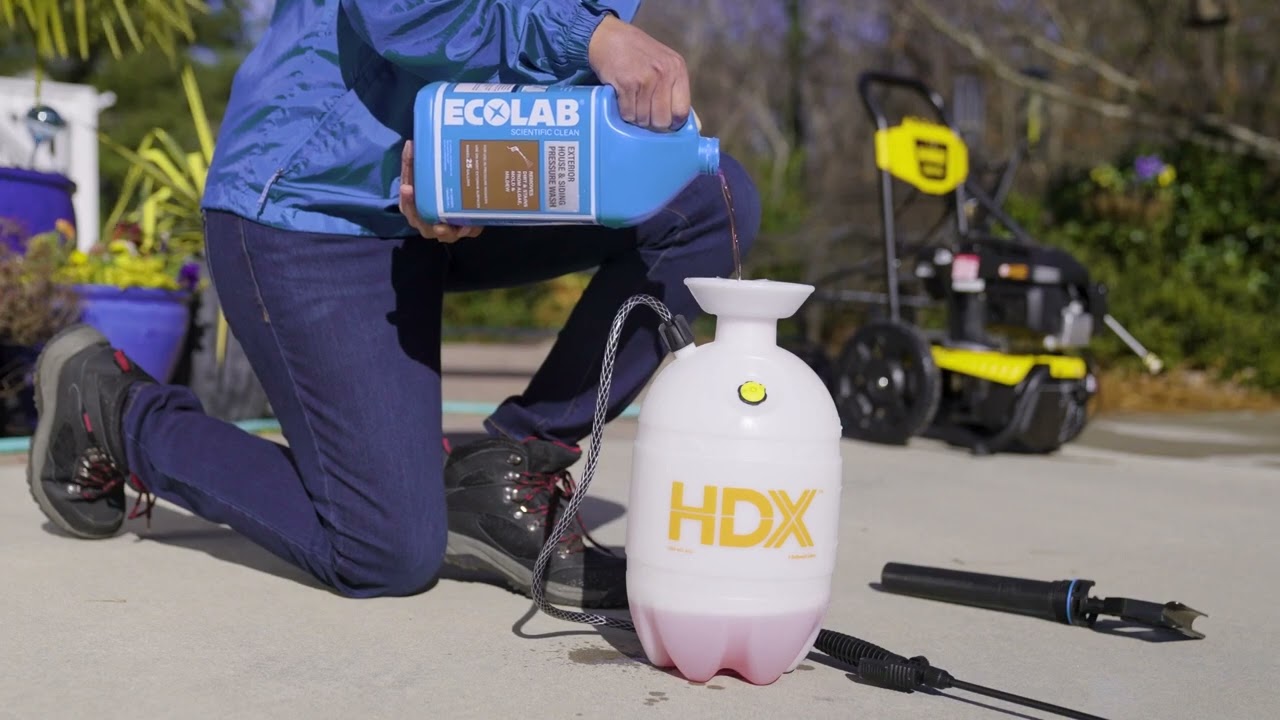
- Pump sprayer (optional but great for applying cleaner gently)
- Safety glasses, closed-toe shoes, and hearing protection
- Plastic sheeting and painter’s tape for delicate areas
Quick prep steps
- Close windows and doors. Check weatherstripping and latch doors securely.
- If you must spray near outlets or exterior fixtures at close range, turn off power to those exterior circuits at the breaker first.
- Cover doorbells, outlets, cameras, and light fixtures if they are not rated for direct spray.
- Move patio furniture, grills, and planters away from the walls.
- Pre-wet nearby plants and soil so cleaner runoff is diluted. Rinse plants again after.
- Inspect siding for cracks, loose panels, missing caulk, and gaps around penetrations.
Pressure basics
Most damage comes from too much force, too close, at the wrong angle. PSI (pressure) matters, but so do GPM (flow rate), nozzle selection, distance, and time spent in one spot. Two washers with the same PSI can behave very differently depending on flow and tip choice.
- For siding, think soft wash mindset: use lower pressure, more detergent dwell time, and a thorough rinse.
- For concrete, increase power carefully: concrete can handle more, but etched lines and zebra striping happen when the tip is too close or movement is uneven.
Nozzle guide
Nozzles control the spray fan and intensity. Many sets are color coded, but always verify the angle marking.
Best picks for most homes
- 40-degree (often white): Great for rinsing siding and painted surfaces. This is a safe starting point.
- 25-degree (often green): Useful for sturdier surfaces and stubborn grime on vinyl or fiber cement, but keep distance and keep moving.
- Soap nozzle (often black): Low-pressure application of detergent. Great for letting chemistry do the work.
Nozzles that cause the most trouble
- 15-degree (often yellow): Can gouge wood, strip paint, and force water behind siding. Use only with a very steady hand, typically for hard surfaces, and not for broad siding cleaning.
- 0-degree (often red): A narrow jet that can damage siding, etch concrete, and cut skin. Not recommended for home exteriors.
Shingle’s safe start: begin with a 40-degree tip and start farther back (about 3 to 6 feet). Adjust distance first, and only then consider a tighter nozzle if the surface can handle it.
Cleaning solutions
Detergent is what breaks the bond between grime and siding. Pressure is mainly for rinsing it away.
Good options
- Pressure washer detergent labeled for siding: Follow the dilution directions exactly.
- Oxygen bleach cleaners: Helpful for organic stains and mildew on many exterior surfaces and generally gentler than chlorine bleach.
Use caution
- Chlorine bleach mixes: Effective on mildew, but can harm plants, fade some finishes, and corrode metals if misused. Never mix bleach with ammonia or acids.
- Strong acids or harsh degreasers: These can discolor masonry, damage sealants, and cause runoff issues.
Dwell time matters
Apply cleaner from the bottom up (to avoid streaks), let it sit briefly per product directions, and do not let it dry on the surface. Work in shade if possible and rinse thoroughly.
Wash siding safely
Water damage usually happens when spray goes upward, gets too close, or hits openings like vents and window gaps.
Safe washing technique
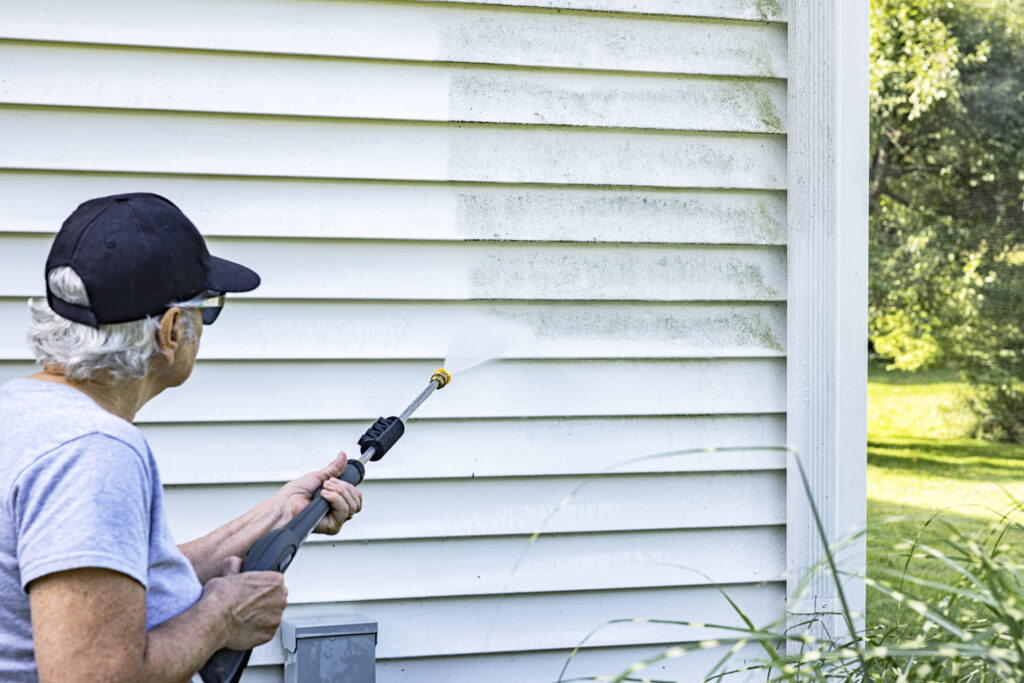
- Angle down: Keep the spray aimed slightly downward, the same direction rain would travel.
- Keep distance: Start 3 to 6 feet back. Move closer only if needed, and only a little at a time.
- Use smooth passes: Sweep left to right in overlapping strokes. Do not linger on one spot.
- Work top to bottom for rinsing: After cleaning, rinse from the top down so dirty runoff does not streak finished areas.
- No ladders: Avoid pressure washing from a ladder. The kickback can throw balance off fast.
Stop immediately if
- Siding flexes or rattles hard under the spray
- You see water appearing behind panels or running out of seams
- Paint starts lifting, blistering, or shredding
- You accidentally spray into vents, soffit openings, or gaps around penetrations
Extra caution zones
- Windows and doors: Avoid blasting seals, thresholds, and weep holes. If a door area is drafty or poorly sealed, address it first. See weatherstrip a drafty exterior door.
- Soffit vents and gable vents: Do not spray directly into vent openings.
- Electrical meters and service entry: Keep spray wide, gentle, and at a distance, or hand-clean instead.
- Caulk lines and lap joints: A tight nozzle can slice caulk or lift siding edges, creating future leaks.
By surface
Vinyl siding
- Use 40-degree for most rinsing.
- Do not spray up under the laps.
- If oxidation is present (chalky film), use a siding cleaner designed for oxidation and rinse very well.
Fiber cement siding
- Stick to moderate pressure and a wide fan tip.
- Keep spray moving to protect paint.
- Avoid forcing water at seams and penetrations.
Painted wood siding and trim
- Use the gentlest approach possible. In many cases, a pump sprayer and a garden hose rinse is safer than pressure.
- If paint is already failing, pressure washing can turn “a quick wash” into “a whole repaint.”
Stucco and EIFS
- Traditional stucco can be damaged by aggressive pressure, especially at cracks and edges. Keep a wide fan, low pressure, and extra distance.
- EIFS is easy to force water behind. If you are not sure what you have, treat it as delicate and consider skipping pressure.
Brick and stone
- Use a 25-degree or 40-degree tip and keep distance.
- Be gentle around mortar joints, especially older lime mortar or already-sanded joints.
- If brick is soft, flaky, or spalling, skip high pressure and use a gentler wash.
- Rinse thoroughly so cleaner does not dry on masonry.
Concrete walks and driveways
- Pre-treat stains, then pressure wash with consistent, overlapping passes.
- Consider a surface cleaner attachment for large flat areas to reduce striping.
- Watch edges and expansion joints where water can infiltrate cracks.
If your concrete already has cracks or spalling, cleaning is a good time to plan repairs. See DIY concrete walkway repair.
Mistakes to avoid
- Starting with a 0-degree or 15-degree nozzle on siding: This is the fastest route to gouges, broken seals, and water intrusion.
- Spraying upward under siding laps: Water can soak sheathing and insulation behind the wall.
- Getting too close “just for a second”: One slip can strip paint, crack vinyl, or etch wood grain.
- Letting detergent dry on the surface: This leads to streaks, residue, and possible discoloration.
- Pressure washing from a ladder: Kickback plus slippery rungs is a risky combo.
- Ignoring existing gaps: If caulk is missing or a window is already leaking, pressure will find that path.
- Washing in direct sun on hot siding: Cleaner evaporates too fast and can spot. Shade is your friend.
Second stories and hard spots
Reaching a second story is where homeowners get tempted to do risky things fast. My rule is simple: if it makes you want to climb a ladder with a pressure wand, it is time to change the plan.
- Use reach tools from the ground: an extension wand or telescoping wand can help, but keep pressure gentle and the spray angled down.
- Use chemistry first: a pump sprayer application with dwell time often reduces the need to “blast” from far away.
- Consider hiring it out: especially for high gables, delicate trim, stucco or EIFS, or homes with failing paint.
Step by step house wash
- Pick a calm, mild day. Aim for overcast or shade, with no strong wind.
- Protect plants and sensitive items. Pre-wet landscaping and cover anything delicate.
- Do a test spot. Choose an out-of-the-way area. Start with a 40-degree tip and stand 4 to 6 feet back.
- Apply cleaner. Use a soap nozzle or pump sprayer. Work bottom to top to reduce streaking.
- Let it dwell. Follow label directions. Keep it damp. Do not let it dry.
- Rinse top to bottom. Keep the spray angled down, use smooth passes, and rinse thoroughly.
- Walk the perimeter after. Look for lifted edges, loosened caulk, or water in window tracks. Catching issues early is a win.
Signs you pushed water inside
Sometimes trouble shows up hours later, especially on windy days.
- New water stains on interior drywall or ceilings
- Damp window trim or wet window sills
- Musty smell near exterior walls
- Tripped GFCI outlets or flickering exterior lights
If you spot a ceiling stain, it is important to find the source quickly. This guide can help you narrow it down: water stain on the ceiling: find the source and fix it.
FAQ
Should you pressure wash under siding?
No. Avoid spraying upward under laps or panels. The goal is to rinse the face of the siding, not drive water behind it.
Do you need to scrub first?
Often, no. A good cleaner plus dwell time handles most dirt. For stubborn spots, a soft brush on an extension pole can help, then rinse gently.
How often should a house be pressure washed?
It depends on shade, trees, and local climate. Many homes do well with a gentle exterior wash every 1 to 2 years, with spot cleaning as needed.
Is it better to use an electric or gas pressure washer for siding?
Electric models are usually plenty for routine siding washes and are easier to control. Gas units can be great for driveways and heavy-duty work, but they raise the risk of forcing water into places you cannot see. If you use gas on siding, treat it like a soft wash job: wide tip, extra distance, and patience.
A simple finish
After the siding looks fresh, take five minutes to look at the parts that quietly protect your home: downspouts, grading, caulk lines, and door seals. Keeping water moving away from the structure is one of the best “yard projects” of all.
If you want a quick win in that direction, this is a helpful companion read: gutters overflowing in heavy rain: causes and fixes.
The 30-second cheat sheet
The key points from this guide, in one place.
- Start gentle: Use a 40-degree nozzle first, start farther back (about 3 to 6 feet), and adjust distance before switching to a tighter tip.
- Angle down: Never spray upward under siding laps, soffit vents, or trim edges where water can get behind the wall.
- Let cleaner do the work: Apply detergent bottom-up, allow dwell time per label, and do not let it dry.
- Rinse top-down: Use smooth, overlapping passes and keep the wand moving to avoid marks and damage.
- Avoid the damage tips: Skip 0-degree and be very cautious with 15-degree, especially on siding and painted wood.
- Do not wash from a ladder: Kickback and slippery rungs are a common accident recipe.
- Protect weak points: Be careful around windows, doors, electrical equipment, vents, and any cracked caulk or gaps.
- Stop immediately if: siding flexes, water shows up behind panels, paint starts lifting, or you notice water getting into vents or gaps.
- Watch for water intrusion later: New interior stains, musty smells, or tripped GFCIs mean stop and investigate.