

Jump to the 30-second cheat sheet for the key points.
One little fix at a time, we’ll make your house a home! And sometimes the fix is not a wrench or a tube of caulk. Sometimes it is simply choosing the right mulch so your yard looks tidy, your plants and soil stay healthier, and your weekends stay yours.
Wood chips, rubber mulch, and stone all count as “ground cover,” but they behave very differently once they are spread out in the sun and rain. Below is a clear, practical comparison with the big four in mind: cost, weed prevention, moisture retention, and curb appeal.
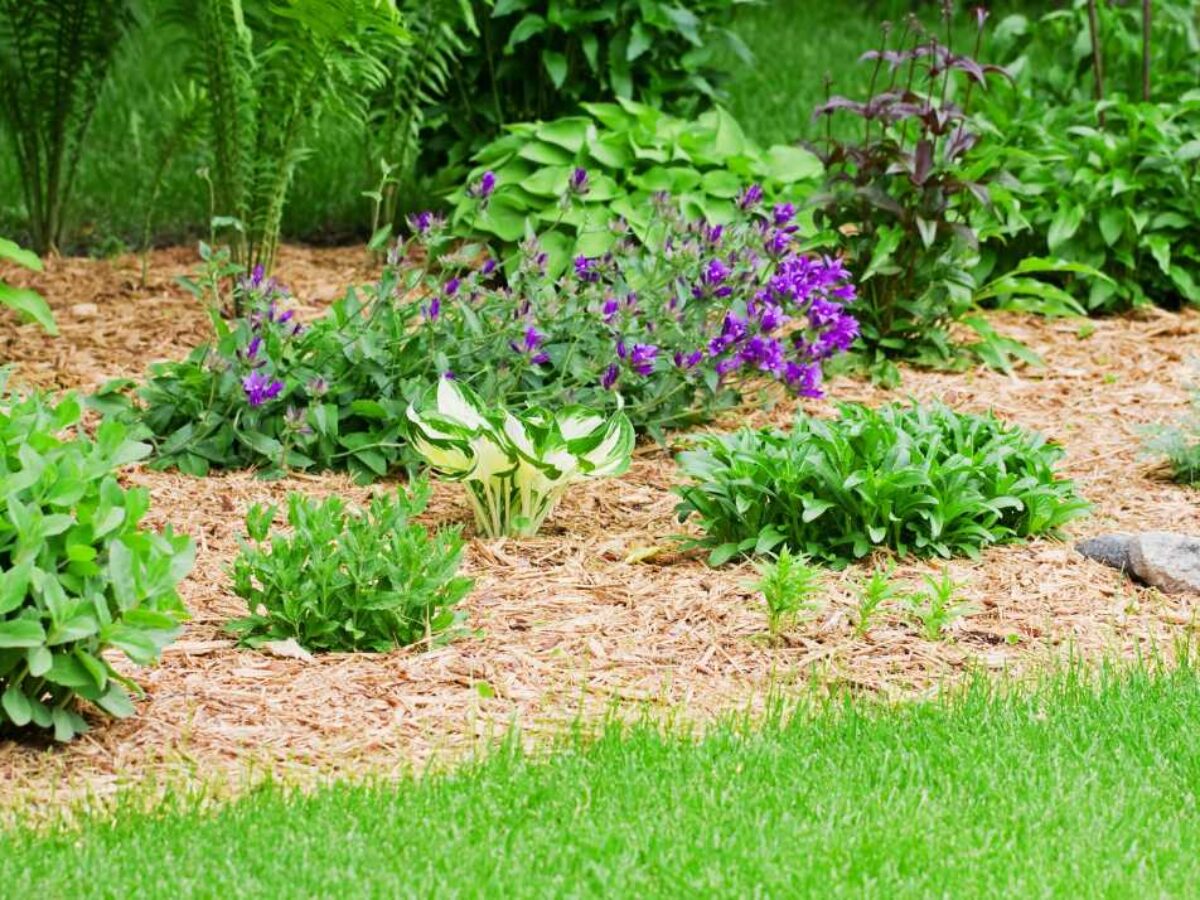
Quick pick: which mulch is best for you?
- Choose wood chips for most garden beds and around trees when you want better soil over time, solid moisture retention, and classic curb appeal at a reasonable cost.
- Choose stone where you want long life and crisp, modern lines, especially in dry climates or areas that get blasted by wind. Plan for careful weed prep, occasional cleanup, and hotter surface temps.
- Choose rubber mainly for play areas or spots where you want a softer surface and do not care about improving soil. If you need true fall protection, make sure the specific product and installed depth are rated for that use.
If you want more yard project ideas, the Yard & Outdoor Projects section has more weekend-friendly upgrades.
Side-by-side comparison
| Factor | Wood chips | Rubber mulch | Stone mulch |
|---|---|---|---|
| Upfront cost | Usually lowest to moderate (varies by type and delivery) | Typically higher upfront | Moderate to high (material plus hauling) |
| Long-term cost | Needs topping off as it breaks down | Lasts longer, may need raking and occasional top-ups | Very long-lasting, occasional refresh or re-leveling |
| Weed prevention | Good when applied thickly | Fair to good, but weeds can root in trapped debris | Fair to good, but windblown soil lets weeds sprout |
| Moisture retention | Excellent | Moderate, reduces evaporation somewhat but does not condition soil | Low to moderate, can run drier in full sun |
| Soil health | Improves soil as it decomposes | Does not feed soil | Does not feed soil |
| Temperature | Keeps roots cooler than bare soil | Can get warm in full sun | Can get very hot in full sun |
| Curb appeal | Natural, soft, traditional | Uniform look, often reads “playground” | Crisp, modern, desert-style |
| Best uses | Planting beds, trees, shrubs | Play areas, some ornamental beds | Path edges, xeriscape, low-plant areas |
Wood chip mulch
Wood chips are the classic choice for a reason. They look right in almost any yard, help soil stay evenly moist, and slowly turn into organic matter that improves soil structure.
Cost
Wood chips are often the most budget-friendly option, especially if you buy in bulk. The tradeoff is that they break down, so you will likely add a thin refresh layer periodically.
Weed prevention
Wood chips block light well when applied at the right depth.
- Best depth for weed suppression: about 2 to 4 inches for most beds.
- Try not to exceed about 4 inches around most ornamentals. Too much can hold extra moisture at the surface and bury smaller plants.
- Too thin lets light through and weeds pop up.
Moisture retention
This is where wood chips shine. They slow evaporation, reduce soil temperature swings, and make watering more efficient.
Curb appeal
Wood chips give a soft, finished look and hide minor bed unevenness. Natural brown fits almost anywhere, while dyed mulches can create a stronger contrast, but may fade over time.
Wood mulch types
- Arborist chips (mixed chips and leaves): great around trees and shrubs, and excellent for soil building over time.
- Shredded bark: a solid pick for slopes because it tends to knit together and stay put better than chunky chips.
- Bark nuggets: can look tidy, but they are more likely to shift, float in heavy rain, or migrate with foot traffic.
Smart tips for using wood chips
- Keep mulch off trunks and stems. Leave a small gap around the base of trees and shrubs so moisture is not held against bark.
- Refresh smart. Before you add more, rake and fluff the old layer. Then topdress lightly instead of piling on inches every year.
- Edging makes it look intentional. A clean edge line is a tiny project with a big payoff.
- Do not rely on landscape fabric alone. Fabric can help at first, but soil and debris build up on top, and weeds can still grow there.
Rubber mulch
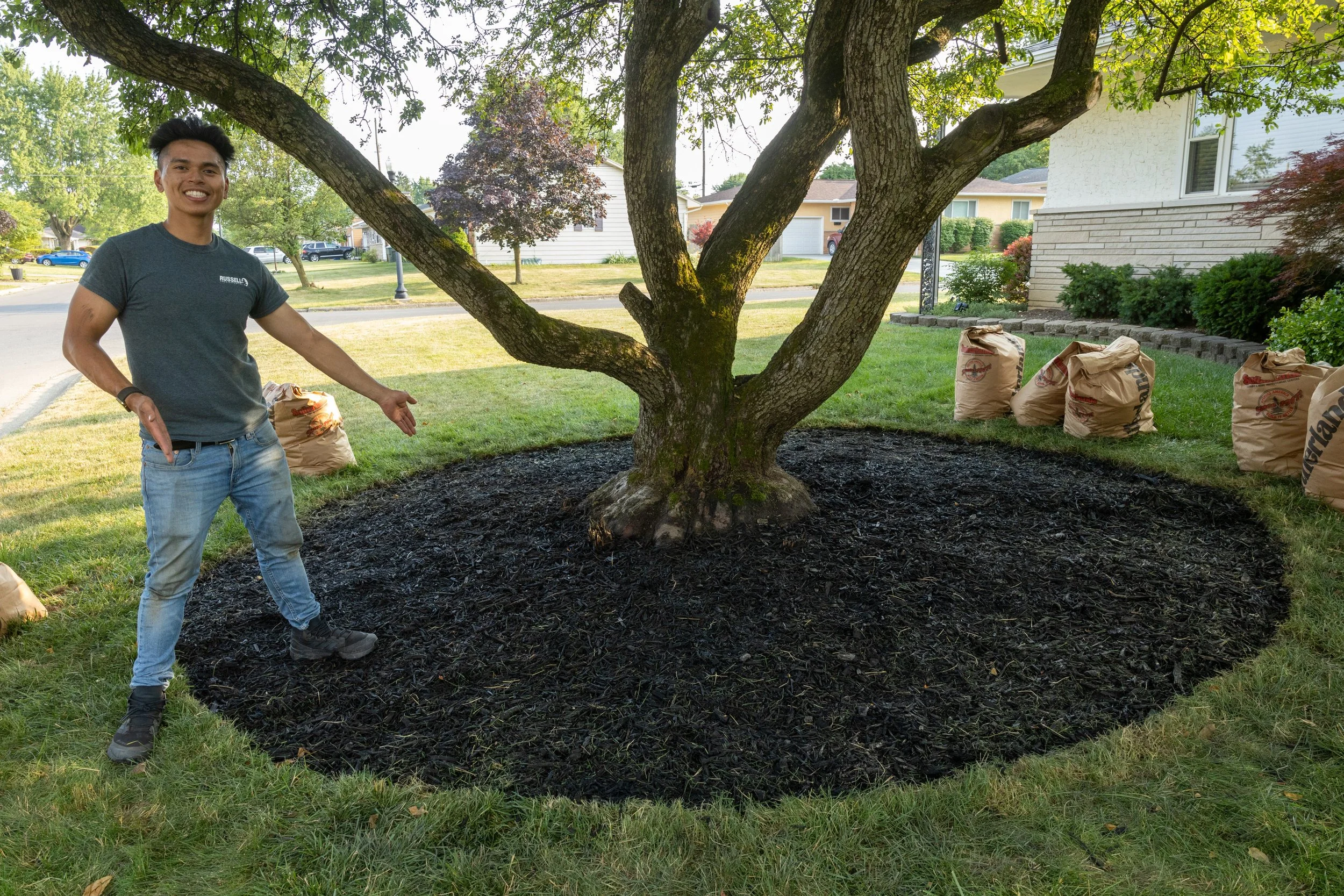
Rubber mulch is usually made from recycled tires and is marketed for longevity and color that does not rot away like wood. It can be a fit for certain spots, but it is not a universal upgrade.
Cost
Rubber mulch is commonly higher upfront than wood chips. Over time, the pitch is that you buy it less often. The real-life value depends on whether you like the look years later and how much debris collects in it.
Weed prevention
Rubber pieces can block light, but weeds still find a way when leaves, dust, and soil settle into the gaps. Once organic debris builds up, weeds can root in that layer and become annoying to pull.
Moisture retention
Rubber does not absorb water like wood, so it does less to buffer moisture swings. It also does not break down into soil-building organic matter.
Curb appeal
Rubber mulch can look very uniform and tidy at first, especially in black or brown. In many front-yard landscapes, though, it can read more like a playground surface than a garden bed. Color choice matters a lot.
Where rubber mulch makes the most sense
- Play areas where you want a softer surface and do not want splinters.
- Ornamental zones where plants are minimal and you want color consistency.
Safety and maintenance notes
- Do not assume it is a fall-safety surface. Playground impact performance depends on the product, installed depth, and upkeep. If you are trying to meet a specific standard, check the product specs and install requirements.
- Expect migration. Pieces can kick out of borders, and they are not fun to pick out of grass.
- Harder to clean. Leaves and dirt settle in, and once it looks messy, it can take real effort to reset.
- Heavy rain can move it. In some yards, it can float or wash into low spots during big storms.
- Little-kid and pet factor. In the wrong spot, small pieces can become a mouth hazard. Borders and supervision matter.
Places to avoid
- Vegetable gardens and herb beds. It is generally not recommended for edibles because it does not improve soil, can run hot in sun, and some homeowners prefer to avoid potential chemical concerns near food plants.
- Hot, full-sun pockets where heat build-up can stress nearby plants.
Stone mulch (gravel, river rock, decorative stone)
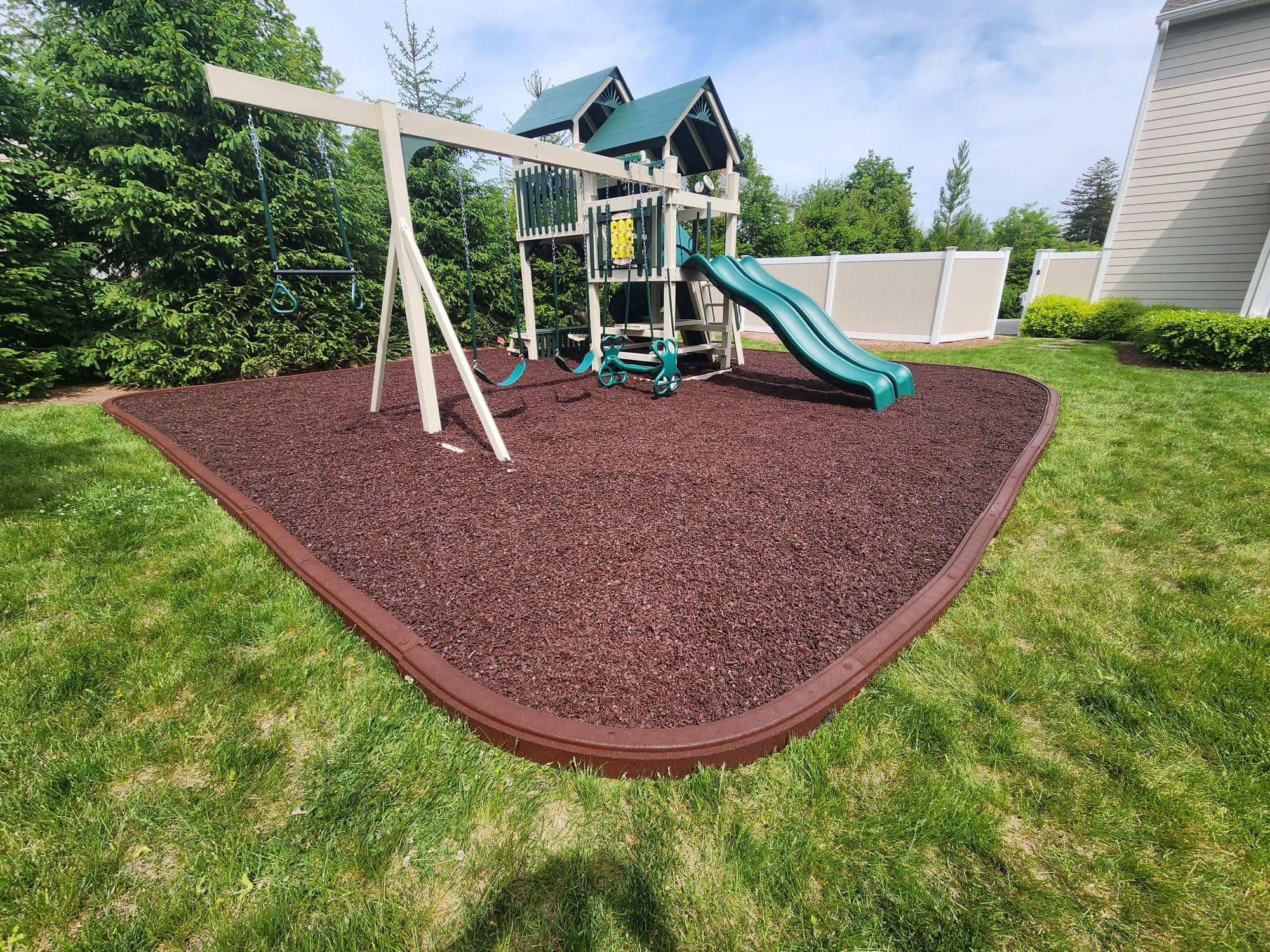
Stone mulch is the long-haul option. It does not decompose, and it can look sharp for years. The tradeoff is heat, weight, and the way weeds still appear once dust and soil settle in.
Cost
Stone can be more expensive upfront, and delivery costs can be significant because it is heavy. Labor is also higher if you are moving it by hand. The upside is that you are not replenishing it every year like wood chips.
Weed prevention
Stone blocks light, but it does not stop windblown dirt from accumulating between rocks. Once that happens, weeds sprout right on top. Solid prep and a true separator layer help.
- Key move: remove existing weeds and roots thoroughly before stone goes down.
- Separator option: if you want one, landscape fabric under stone can help slow mixing with soil. It still needs maintenance because debris builds up on top over time.
- Expect maintenance: occasional hand-pulling and leaf blowing or raking to remove organic debris.
Moisture retention
Stone does not hold moisture the way wood does. In full sun, stone can increase soil temperatures and may increase evaporation from the soil beneath, depending on rock color, size, and your climate. It can also reflect heat onto nearby plants, which is great for heat-tolerant designs and frustrating for thirsty plants.
Curb appeal
Stone can look clean, modern, and intentional. It is especially popular for xeriscape or desert-style yards. Just remember that stone highlights messy edges, so crisp borders matter.
Where stone mulch works best
- Along walkways and hardscapes
- In drainage-friendly areas where splash and runoff happen
- In low-plant landscapes where you are not constantly digging and replanting
Where stone can be frustrating
- Planting beds you rework often. Digging in rock is not a cozy weekend activity.
- Under trees that drop lots of leaves. You will spend time removing organic debris so it does not become a weed nursery.
- Light gravel in traffic areas. Smaller pea gravel can migrate with foot traffic, pets, and runoff, especially on slopes.
Weed control basics
Mulch is a helper, not a magic spell. The best weed control comes from pairing the right material with good prep.
Step-by-step prep that pays off
- Pull or dig existing weeds, including roots.
- Rake the bed smooth and remove sticks and rocks that create gaps.
- Pick the right underlayer. Cardboard (plain, tape-free) can be a simple biodegradable option under wood chips. For stone, a layer of landscape fabric can slow soil mixing, but plan for future weeding on top as debris builds up.
- Apply the right depth for your material and your plants.
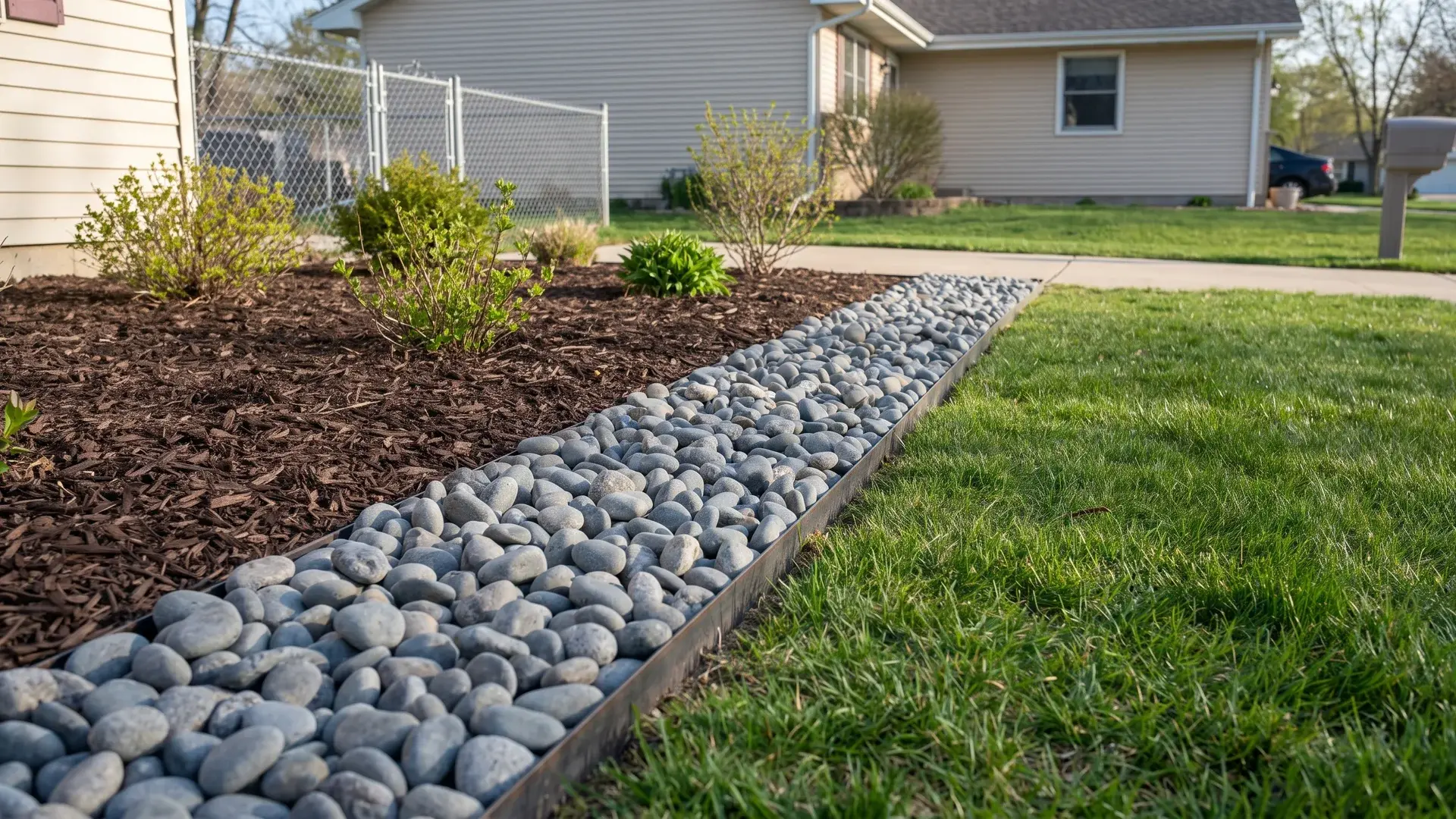
- Edge the bed so mulch stays put.
If water is flowing into beds and feeding weeds, it can help to manage runoff too. A small drainage improvement like downspout extensions can reduce soggy spots that turn into weed magnets.
Moisture and plant health
Mulch affects how often you water and how comfortable plant roots feel.
- For moisture-loving shrubs and garden beds: wood chips are usually the easiest win.
- For drought-tolerant landscapes: stone can fit, but watch heat and choose plants that can handle it.
- For play zones: rubber can be fine, but keep it out of beds where you want richer soil.
If your yard struggles with moisture in the wrong places, you might also like how to slope soil away from your foundation as a simple way to guide water where it should go.
Curb appeal match-ups
Mulch is a big visual surface, like paint for the ground. A simple match-up can keep your yard looking calm and cohesive.
- Traditional homes and leafy yards: natural wood chips look warm and familiar.
- Modern lines and minimal planting: stone mulch can look crisp and intentional.
- Family play-first backyards: rubber can blend into a play zone if you keep borders neat and tidy.
Safety notes
- Heat: stone and rubber can get hot in direct sun. Keep that in mind near patios, pet paths, and tender plants.
- Slipping and shifting: loose stone can roll underfoot on slopes. Smaller angular gravel tends to lock together better than larger round rock.
- Termites and pests: mulch does not cause termites, but it can hold moisture and provide cover. Keep mulch pulled back from siding and wood, maintain clearance near the foundation, and avoid piling it against the house.
- Firewise concerns: if you live in a wildfire-prone area, follow local defensible-space guidance. Organic mulches can be part of risk planning depending on distance from the house and local rules.
How much mulch do you need?
Getting the amount right saves money and prevents thin coverage that invites weeds.
Rule of thumb
- Wood chips: aim for 2 to 4 inches deep in planting beds.
- Stone: commonly 2 inches is enough for coverage, sometimes more depending on rock size and the look you want.
- Rubber: follow the bag guidance for depth and use, especially in play zones.
Quick volume math
Cubic yards = (square feet × depth in inches) / 324.
Measure your bed area (length × width) to get square footage, then choose your depth. Buying a little extra is better than coming up short, because color and size can vary between batches.
Common questions
Is it okay to put new mulch over old mulch?
Usually yes for wood chips, as long as the total depth does not get excessive and you keep mulch away from trunks and stems. Rake and fluff the old layer first, then topdress lightly. For stone and rubber, it is better to clean out debris and level the surface before adding more.
What is the best mulch for weeds?
For most yards, wood chips applied 2 to 4 inches thick over good prep does a great job. Stone can also suppress weeds, but it often needs more maintenance once dust and leaves build up.
What looks best in a front yard?
Wood chips are the safest, most widely appealing choice. Stone can look high-end and modern when edging is crisp. Rubber is best kept to play areas or very specific designs.
Can mulch cause moisture problems near the house?
Mulch helps soil hold water, which is great in a garden bed. But near a foundation, you want smart grading and drainage so water does not linger. Pair good landscaping with runoff control, like downspout extensions and proper slope.
A simple decision plan
- Start with function: garden bed, tree ring, path edge, or play area?
- Decide what you want long-term: improved soil (wood) or long-lasting surface (stone, rubber).
- Check sun exposure: hot full sun pushes many yards toward wood chips for plant comfort.
- Commit to maintenance you will actually do: topping off wood chips vs. cleaning debris off stone vs. raking rubber.
Pick the mulch that fits your yard’s needs, then spread it neatly and evenly. That small, steady care is how a yard starts feeling like home.
The 30-second cheat sheet
The key points from this guide, in one place.
- Best all-around for garden beds: wood chips. Great moisture retention, solid weed suppression at 2 to 4 inches, and improves soil as it breaks down.
- Longest-lasting look: stone mulch. Higher upfront cost and heavy labor, can run hot in sun, and weeds still sprout once dust and leaves collect.
- Best for play areas: rubber mulch. Softer underfoot and long-lasting, but not soil-friendly and can collect debris that grows weeds. It is not automatically a code-compliant fall surface unless the product and installed depth are rated for that use.
- Weed control depends on prep: remove existing weeds and roots, smooth the bed, edge cleanly, then apply the right depth.
- Moisture retention ranking (typical): wood chips (best) → rubber (middle) → stone (often lowest in hot sun).
- Curb appeal quick match: traditional yards (wood), modern xeriscape (stone), play-first zones (rubber).