

Jump to the 30-second cheat sheet for the key points.
One little fix at a time, we'll make your house a home!
Basement moisture can be sneaky. Sometimes humid indoor air turns into water on a cool concrete wall. Other times, moisture is coming through the wall or slab from outside. The good news is that a tiny square of aluminum foil can help you tell the difference.
Quick safety note: If you have standing water, active flooding, or any chance water is contacting outlets, cords, or your electrical panel, deal with safety first and skip the test until the area is dry and safe.
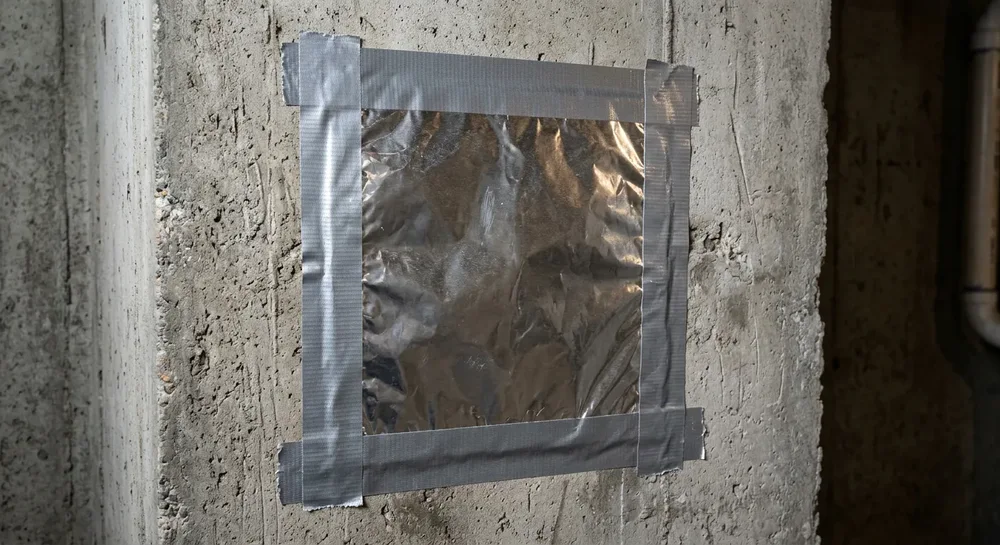
What the foil test tells you
The aluminum foil test is a simple way to separate two common moisture sources:
- Condensation: Moisture in the air inside your basement condenses on a cool surface, like a concrete wall or slab.
- Moisture migrating through the material: Water vapor (and sometimes liquid water) moves through concrete or masonry from the soil outside and shows up on the inside surface.
Foil acts as a vapor barrier. If water forms on the room side of the foil, that points to condensation. If water forms on the wall side of the foil, that points to moisture moving through the wall or slab.
One extra bit of building science that helps it click: condensation happens when a surface is colder than the air's dew point. Basements love cool surfaces, especially in humid summer weather.
Before you start: pick the right spot
You will get the clearest results when you test a spot that actually shows symptoms.
Best results are on bare concrete or masonry. Paint, paneling, or waterproof coatings can change what you see (and sometimes hide where the moisture is really coming from). If you can, choose an uncoated section.
Good places to test
- A section of wall with damp staining, efflorescence (white powdery residue), or peeling paint
- A spot near the base of the wall where the floor and wall meet
- An area behind boxes or shelving that feels clammy
Avoid these spots
- Areas with active dripping from a pipe, valve, water heater, or HVAC equipment
- Recently cleaned or recently painted patches that are still curing
- Directly under a known plumbing leak or overflow
If you are still in the "is it the basement at all" stage, take a quick pass through the basics in Basements & Moisture and keep an eye out for plumbing issues and obvious water entry points.
Tools and materials
- Aluminum foil
- High-tack tape that sticks well to masonry (painter's tape usually is not enough)
- Scissors
- A dry rag or paper towel
- Optional: a marker to write the date and time on the foil
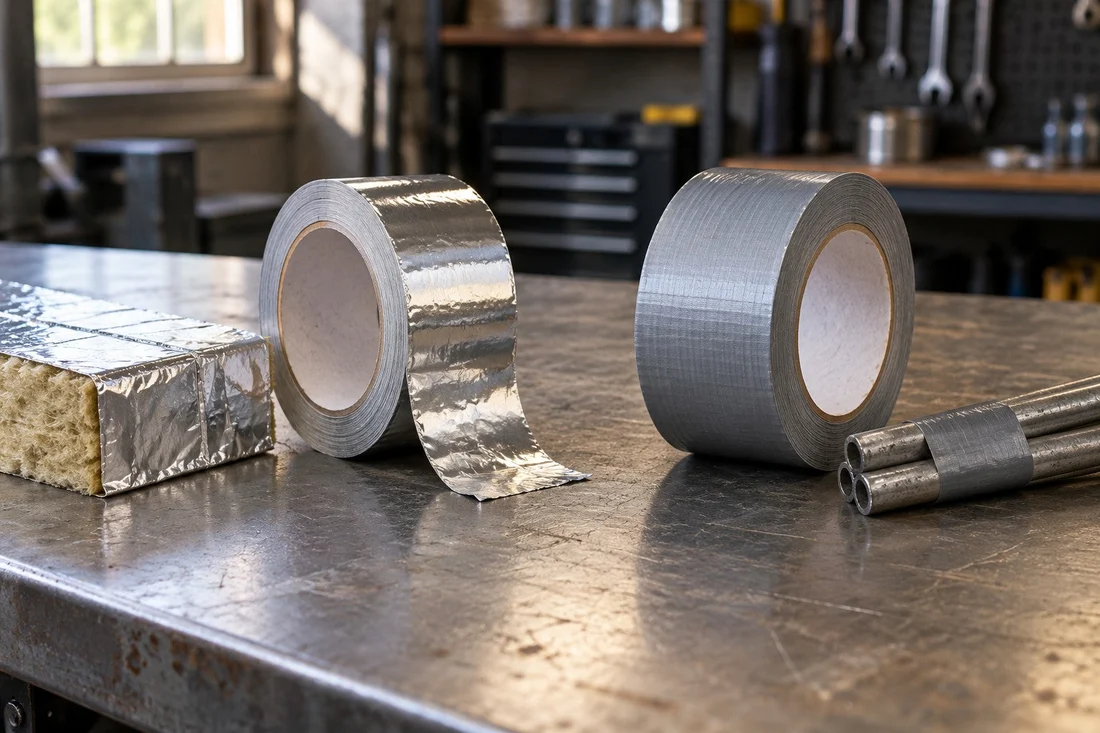
Step-by-step: how to do the aluminum foil test
1) Dry the surface
Wipe the test area with a dry rag. The goal is to start with a surface that is as dry as you can reasonably make it.
2) Cut a foil square
Cut a piece roughly 12 inches by 12 inches. Bigger is fine, but you want it easy to seal tightly.
3) Tape it as airtight as you can
Press the foil flat to the wall or floor and tape every edge so humid air cannot sneak behind it.
Because concrete is rough, true airtight is tough. What you are aiming for is a continuous border of tape all the way around, pressed firmly into pores and texture. Do your best not to bridge over pits or divots where air could slip through.
Tip: The test only works when the foil is well-sealed. Gaps can give you a confusing result.
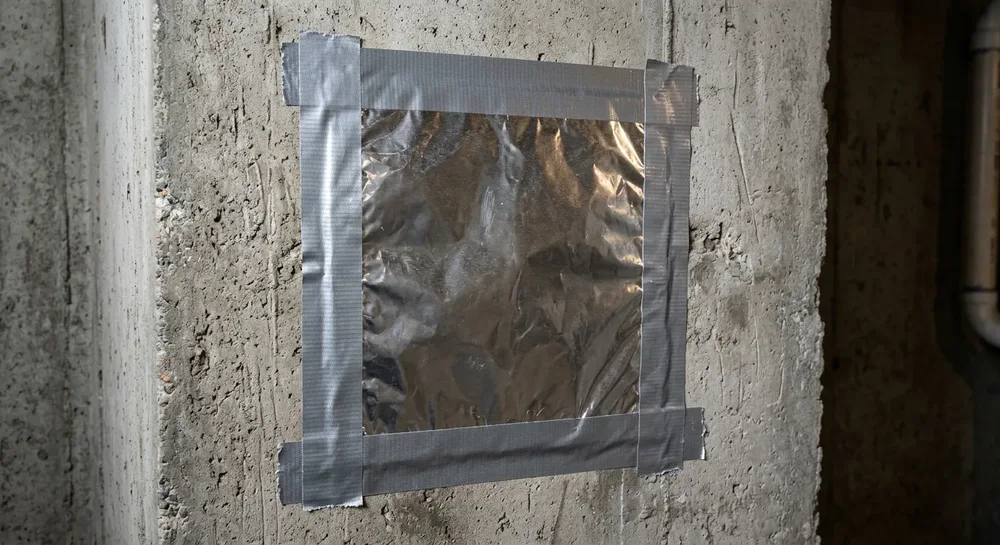
4) Wait long enough
Leave it in place for 24 to 48 hours. In very humid weather or very damp basements, you may see results sooner, but a full day is a good minimum.
Try not to disturb the foil during the wait. Peeking and re-pressing edges can break the seal and muddy the result.
5) Check both sides
Peel the foil back and look at:
- The outside (room) side of the foil
- The wall side, meaning the surface behind where the foil was sealed
Try not to smear water around as you remove it. A quick look first, then a closer look, works best.
How to read your results
If water is on the room side of the foil
Likely culprit: condensation. The wall or floor is cooler than the basement air, so moisture in the air is turning into liquid water on the coldest surfaces.
What it often looks like: Droplets on the exposed foil surface, while the wall behind the foil looks comparatively dry.
If water is on the wall side of the foil
Likely culprit: moisture migrating through the wall or slab. That moisture may be vapor diffusion through concrete, or it may be liquid water intrusion depending on conditions. Foil blocks drying to the basement air, so moisture collects behind the foil.
What it often looks like: Dampness or beads of water on the concrete where the foil was, while the room side of the foil is mostly dry.
If both sides are wet
This can mean you have both problems, which is common. It can also happen if the foil edges were not sealed well and humid basement air slipped behind the foil.
If neither side is wet
That is a helpful result too. It suggests the dampness is intermittent (only after rain, snow melt, or certain seasons) or coming from a different source like plumbing, a basement shower leak, an HVAC condensate line leak, or a one-time spill.
What to do next if it is condensation
If your foil test points to condensation, your target is indoor humidity and cold surfaces.
Quick wins
- Run a dehumidifier and drain it reliably (pump, floor drain, or frequent emptying).
- Improve air circulation so corners and behind-storage areas are not stagnant.
- Cover cold surfaces where appropriate, such as insulating rim joists and addressing cold water pipes that sweat.
- Use bathroom and laundry exhaust if those spaces vent into or near the basement. If you suspect a fan issue, this can help: Bathroom exhaust fan not pulling air: how to test and fix it.
A reasonable humidity target
Many basements feel best around 40% to 50% relative humidity. Depending on your climate and the season, you may do better a bit lower, but you do not need to chase ultra-low numbers if it makes the space uncomfortable or expensive to maintain.
What to do next if it is seepage
If your foil test points to moisture migrating through the wall or slab, focus on keeping water away from the foundation and reducing pressure against the walls.
Start outside first
- Clean and control gutters. Overflow can dump roof water right at the foundation. A helpful walkthrough is Gutters overflowing in heavy rain: causes and fixes.
- Extend downspouts so water discharges well away from the house.
- Check grading. Soil should slope away from the foundation so rainwater does not pool next to the wall.
- Watch after a storm. Note where puddles form and where roof runoff lands.
Then evaluate indoor water management
- Cracks and penetrations: Small cracks can be sealed, but recurring water entry can mean outside drainage needs attention first.
- Floor and wall joint leaks: Water at the cove joint (where wall meets slab) may indicate hydrostatic pressure and may require drainage solutions.
- Consider a waterproofing plan: For DIY steps focused on damp walls, see DIY basement waterproofing for damp concrete walls.
Foil test mistakes
- Not sealing the edges tightly: Even a small gap can let humid air behind the foil and mimic moisture coming through the wall. Use a continuous tape border and press it down firmly.
- Testing during an unusual dry spell: If moisture only shows up after rain, test again after a wet period.
- Testing near a hidden plumbing or HVAC issue: Rule out drips from supply lines, drain lines, water heaters, sump discharge, and HVAC condensate lines first.
- Assuming paint is waterproofing: Some coatings hide symptoms without addressing the water source. The foil test is about identifying the source, not proving a coating works.
When to bring in help
Moisture is normal to investigate, but some situations call for a pro sooner rather than later:
- Standing water that returns after pumping or drying
- Cracks that are widening, bowing walls, or doors above that suddenly stick (possible structural movement)
- Visible mold growth, strong musty odor that will not improve, or health concerns
- Electrical outlets, panels, or extension cords in wet areas
If you want to understand how moisture issues can show up during a purchase, Why home inspections matter pairs nicely with this test, since inspectors often flag moisture signs even when the exact source needs follow-up.
Basement moisture FAQ
How big should the foil be?
A 12 inch square is a sweet spot. Big enough to show clear beads of water, small enough to seal well.
Can I do this test on the floor?
Yes. Tape a foil square tightly to the slab. Water under the foil suggests moisture is coming up through the slab (often vapor, sometimes more), while water on top points to condensation from humid air.
What if I see white powder on the wall?
That is often efflorescence, mineral salts left behind when moisture moves through masonry. It is a clue that moisture migration has happened, even if it is not active every day.
Is the foil test the final answer?
It is a great first clue, not the whole story. Many basements have a mix of moisture migration plus condensation, especially in humid summers and during wet seasons.
The 30-second cheat sheet
The key points from this guide, in one place.
- Goal: Use a taped foil square to tell condensation (indoor humidity) from moisture migrating through concrete (vapor or liquid).
- How: Dry a problem spot on bare concrete or masonry, tape a 12 in x 12 in foil square with a continuous, high-tack border, wait 24 to 48 hours without disturbing it, then check both sides.
- Water on room side of foil: Condensation. Reduce humidity with a dehumidifier, improve airflow, address cold surfaces like sweating pipes and rim joists.
- Water behind foil (wall side): Moisture migrating through the material (often called seepage). Start outside: gutters, downspouts, grading. Then evaluate cracks, wall to floor joint leaks, and drainage options.
- Both sides wet: Could be both issues or a poor seal. Re-test with tighter tape edges and a continuous border.
- Neither side wet: Moisture may be intermittent. Re-test after rain or during humid weather, and rule out plumbing or HVAC condensate line leaks.
- Get help fast if: standing water returns, walls bow or crack grows, electrical meets water, or mold concerns appear.