
Jump to the 30-second cheat sheet for the key points.
One little fix at a time, we’ll make your house a home. If your bifold closet doors keep jumping out of the top track, the good news is that most “falling off” problems come down to three small things: a top piece that is not seated (pivot or guide), a bottom pivot bracket that is loose or out of position, or a door that is slightly out of plumb and rubbing.
Quick safety and a simple test
Bifold doors are awkward when they slip, so start with a quick check:
- Keep fingers clear of hinges while you lift or re-seat the door.
- Support the door’s weight with one hand near the center stile so it does not twist.
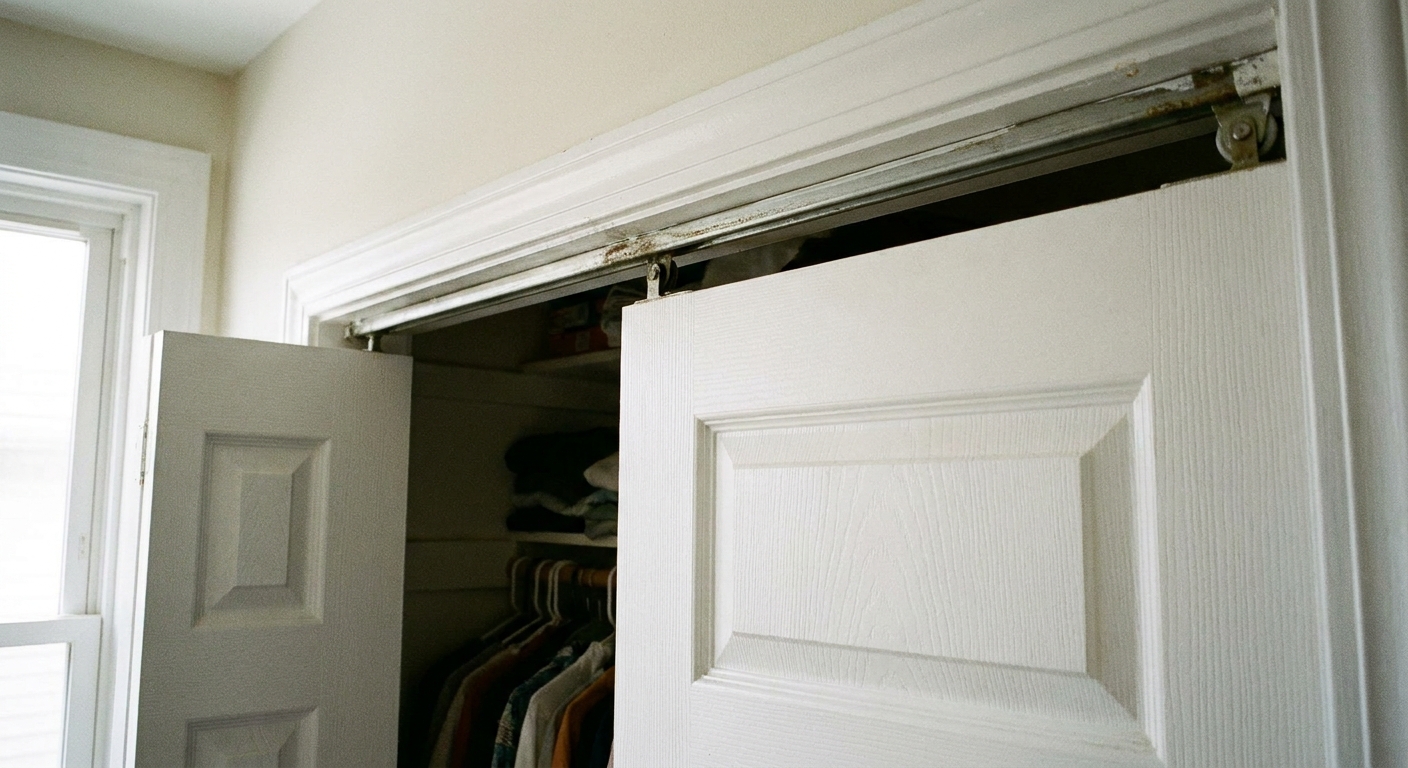
- Test what is failing: Open the door halfway and gently lift up on the outer edge (the side farthest from the jamb). If it pops out easily, the top guide is not engaged correctly, the pivot is loose, or the track is dirty or bent.
If the track is badly bent, cracked, or pulling away from the header, skip to the “When to replace parts” section.
Know the parts
Most standard bifold setups have:
- Top track mounted to the header.
- Top pivot pin on the jamb side. This pin sits in a pivot bracket and acts like the door’s hinge point.
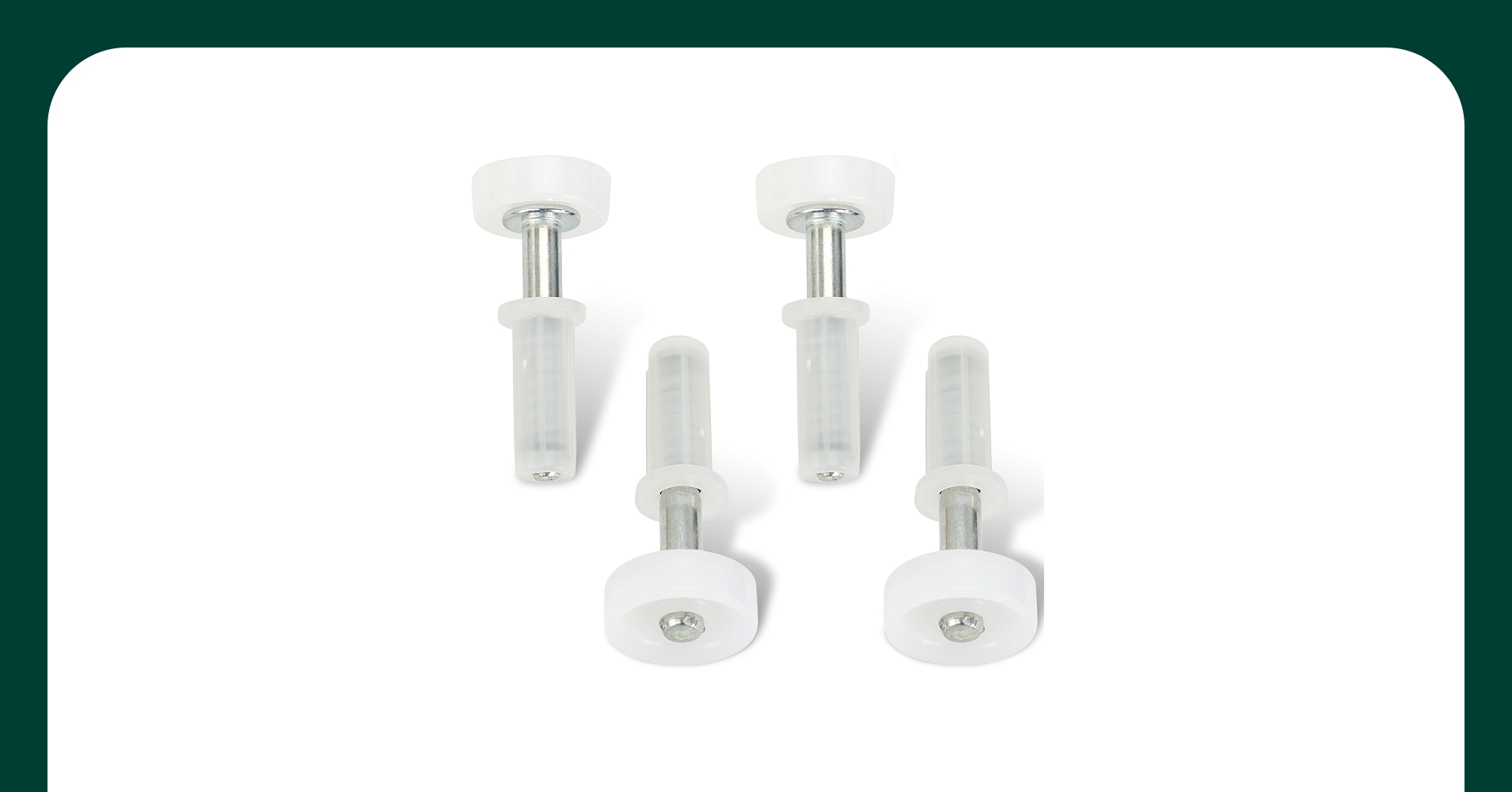
- Top guide on the lead panel (the panel you pull). This is often a wheel or spring loaded pin that rides inside the top track.
- Bottom pivot pin that drops into a bottom pivot bracket on the floor or jamb.
- Hinges connecting the two door panels.
- Optional door aligner clip (a small plastic or metal clip on the meeting edge) that helps the panels line up when closed.
If one of these is loose by just a few millimeters, the door can rack, bind, and pop out.
Tools and supplies
- Phillips screwdriver (or driver bit)
- Small adjustable wrench or pliers (for pivot adjustments on some styles)
- Vacuum and a dry rag
- Pencil
- Optional: level, dry lubricant (like a PTFE dry spray), wood toothpicks and wood glue for stripped screw holes
Step 1: Clean the track and confirm the guide is in it
Before changing adjustments, remove the easy causes.
- Vacuum the top track end to end. Dust and pet hair can act like a speed bump and push the guide out.
- Wipe the track with a dry rag.
- Look up at the hardware while you move the door. You should see the top guide wheel or pin sitting inside the track channel.
Step 2: Re-seat the top pivot and top guide
A common “it fell off again” culprit is top hardware that is not fully engaged. Some doors fail at the top pivot (jamb side). Others pop out because the top guide (lead panel) is not seated in the track.
Re-seat the top guide
- Partly fold the door so you can reach the top of the lead panel.
- Check the guide: If it is a spring loaded pin style, press it in and confirm it pops back out freely.
- Put the guide back into the track: Lift the door slightly, depress the spring pin if needed, and slip the guide into the track channel.
Re-seat the top pivot
- Open the door slightly so you can reach the top corner near the jamb.
- Lift the door gently to take weight off the top hardware.
- Press the top pivot into its bracket. Many styles click or snap when fully seated.
Fine-tune top adjustments
Depending on your hardware, you may have either an adjustable pivot (screw style) or a pin seated in a bracket slot.
- If there is an adjustment screw: turn in small increments. The goal is a door that folds without scraping and keeps the top guide centered in the track.
- If it is a bracket slot: loosen the bracket screws slightly, shift the bracket a tiny amount, then retighten.
Shingle tip: Make changes in “tiny bites.” A quarter turn or a 1/16 inch shift can be the difference between smooth and stubborn.
Step 3: Tighten and set the bottom pivot bracket
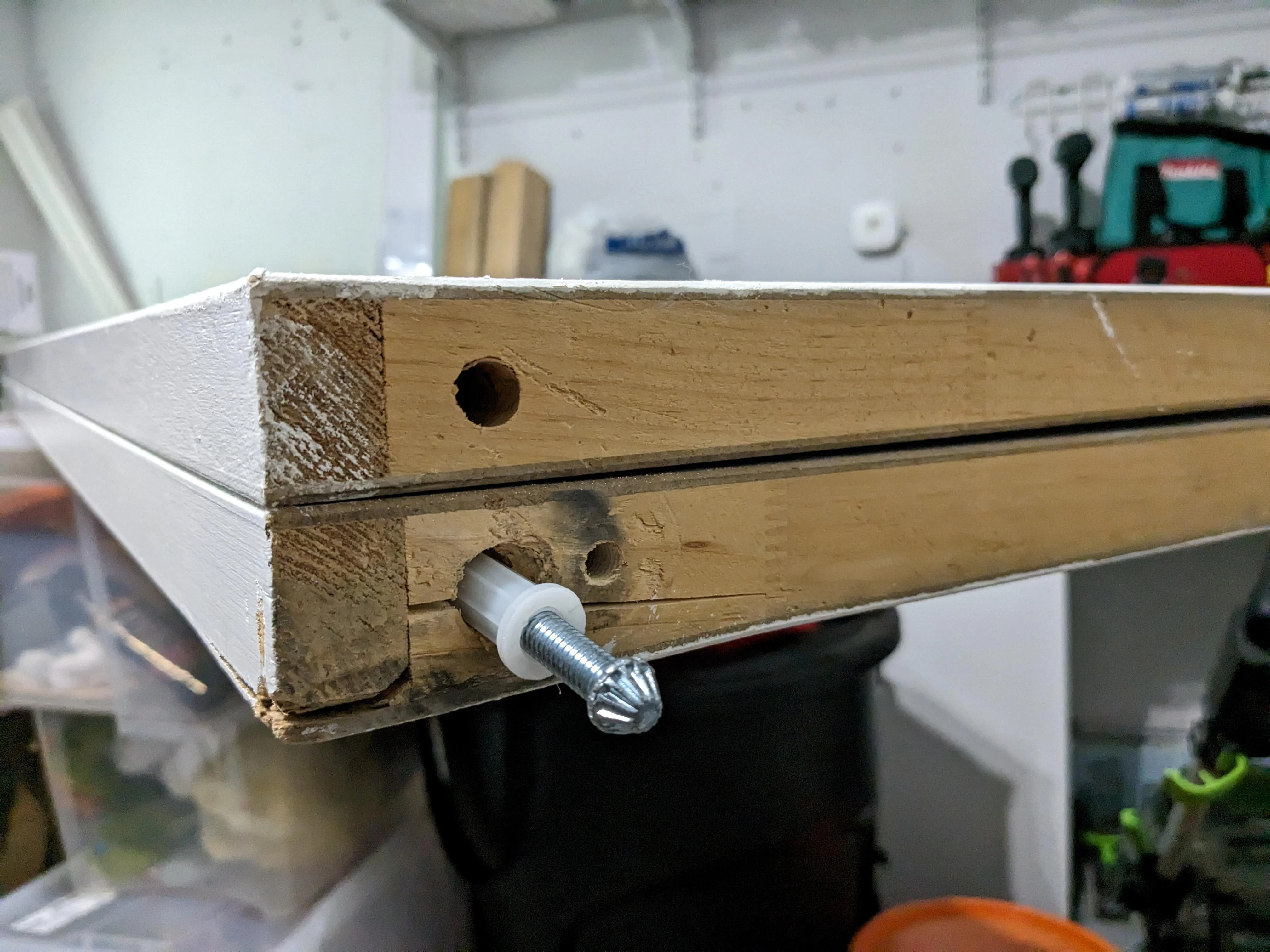
The bottom pivot bracket is the anchor. If it is loose, the door leans, the top guide binds, and the door can hop out of the track.
- Check the bracket screws. If the bracket wiggles, tighten it.
- If screws just spin, the hole is stripped. Remove the screw, insert a couple of toothpicks dipped in wood glue, snap flush, let it set, then reinstall the screw snugly.
- Confirm the bottom pivot pin is fully seated in the bracket cup or slot.
If the door is rubbing the floor or jamb
Many bottom brackets have a little side to side adjustment.
- Loosen the bracket screws just enough to move it.
- Nudge the bracket slightly toward or away from the jamb to square the door in the opening.
- Retighten, then test the fold and swing.
If the bracket area is chewed up or the floor is uneven, a thin shim behind the bracket can help it sit solid and stay put after tightening.
Step 4: Square the doors
Even when the pivots are seated, misalignment makes the door fight itself.
Quick alignment checks
- Gap check: With the door closed, the gap along the jamb side should be fairly even from top to bottom.
- Fold check: When folding, the panels should stay in the same plane, not twist.
- Track check: The top guide should roll or slide smoothly without hopping out.
Small fixes that make a big difference
- Hinge screws loose: Tighten them. Loose hinges let panels skew and yank the guide sideways.
- Door hitting the casing: Adjust the top pivot and bottom bracket to shift the door inward or outward until it clears.
- Door dragging: Raise the door slightly by adjusting the bottom pivot (some pins are height adjustable). If yours is not adjustable, you may need a different pivot pin length or a new bracket style.
What success looks like
When you are dialed in, the door folds smoothly, the top guide stays centered in the track, and the gaps look even with no rubbing or popping at the top.
Step 5: Help it stay on track
If everything is aligned but motion still feels gritty:
- Use a dry lubricant sparingly inside the top track. Dry lubes tend to stay cleaner than oily sprays, and they are less likely to leave residue on the door or trim.
- Check for track dents. A small inward bend can pinch the guide wheel and push it out. Minor bends can sometimes be straightened carefully, but do not force it.
If you need to remove and reinstall the door
Sometimes the easiest way to re-seat everything is to take the door down on purpose.
- Fold the door and support the weight near the middle.
- Lift up slightly to relieve pressure on the bottom pivot pin.
- Pop the bottom pivot pin out of the bottom bracket (some styles lift and swing out, others need the bracket loosened).
- Drop the top guide out of the track (depress a spring pin if your guide uses one), then angle the door out carefully.
- Reinstall in reverse: guide into the track first, then seat the bottom pivot pin into the bracket, then check alignment.
When to replace parts
Sometimes the hardware is simply worn out.
- Cracked plastic guide wheel or a guide that is flat spotted: replace the guide.
- Pivot pin bent or wobbly: replace the pivot pin.
- Stripped bracket that will not tighten even after reinforcing the holes: replace the bracket or move it to fresh wood and patch the old holes.
- Track pulling away from the header: resecure into framing if possible. If the track is damaged, replace it.
If the door panels themselves are swollen, delaminating, or badly warped, hardware adjustments can only do so much.
Common problems and fast fixes
- Door keeps popping out at the top: Confirm whether it is the top guide or the jamb side top pivot, then re-seat it and tighten the bottom pivot bracket.
- Door folds but scrapes the jamb: Shift the bottom pivot bracket slightly and fine tune the top pivot position.
- Door won’t stay closed: Tighten hinge screws, check alignment, and look for a missing or loose door aligner clip on the meeting edges.
- Door drags on carpet: Raise using an adjustable bottom pivot if available, or consider a different bottom bracket and pin style.
Related Home Buyers Talk guides
The 30-second cheat sheet
The key points from this guide, in one place.
- Clean first: Vacuum and wipe the top track so the guide wheel or pin can move smoothly.
- Identify the correct top piece: The top pivot is usually on the jamb side. The top guide is often on the lead panel and rides in the track. Fix the one that is actually jumping out.
- Re-seat the top hardware: Lift the door slightly and snap the top pivot into its bracket, and make sure the top guide is fully engaged in the track.
- Tighten the bottom pivot bracket: A loose bottom bracket lets the door lean and pop out. Fix stripped holes with toothpicks and wood glue, then retighten.
- Square the door: Check for even gaps and rubbing. Tighten hinge screws, then tweak top and bottom adjustments in small increments.
- Use dry lube only: If needed, apply a light dry lubricant in the track. Avoid greasy sprays that attract dust.
- Replace worn parts: Swap cracked guides, bent pins, or damaged brackets if adjustments will not hold.